

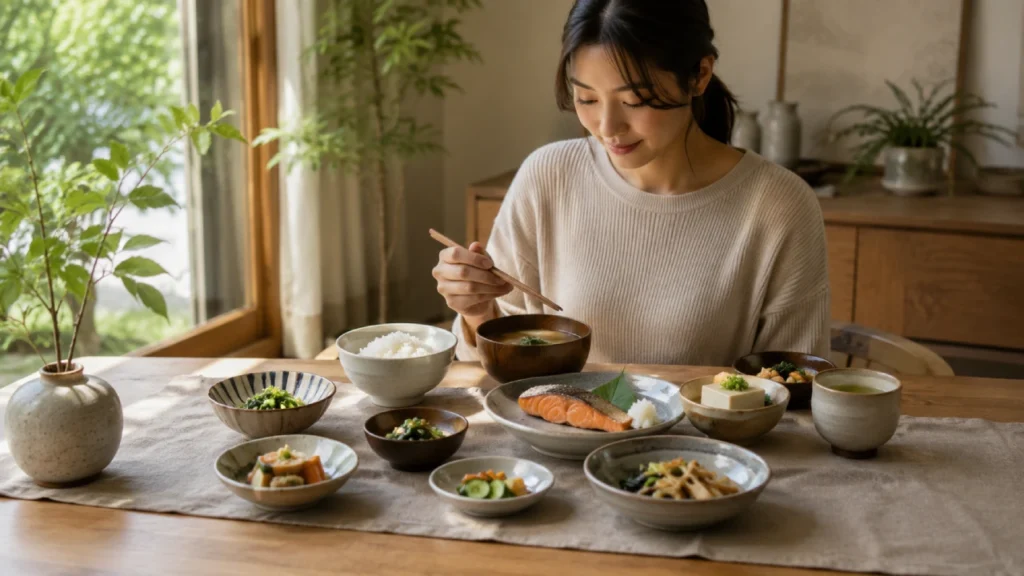
In recent years, Japanese food has been getting a lot of worldwide attention, not only for the taste but also for the way it fits into “healthy” eating, you know, without making it feel like a chore. Japan keeps showing up near the top for life expectancy numbers, and sure, there are many reasons, but diet habits are often part of that story. Instead of doing strict routines or counting every single calorie, traditional Japanese meals tend to lean on balance, moderation, variety, and a kind of careful mindfulness while eating.
What makes the whole Japanese food culture feel extra interesting is that healthy eating is not treated like some short-term, trendy thing that fades after a month or two. It is more like woven into ordinary days, through small routines. Below are a few Japanese food habits that help everyday meals feel balanced, and also more sustainable, not just “healthy on paper.”
Eating A Variety Of Foods In Small Portions
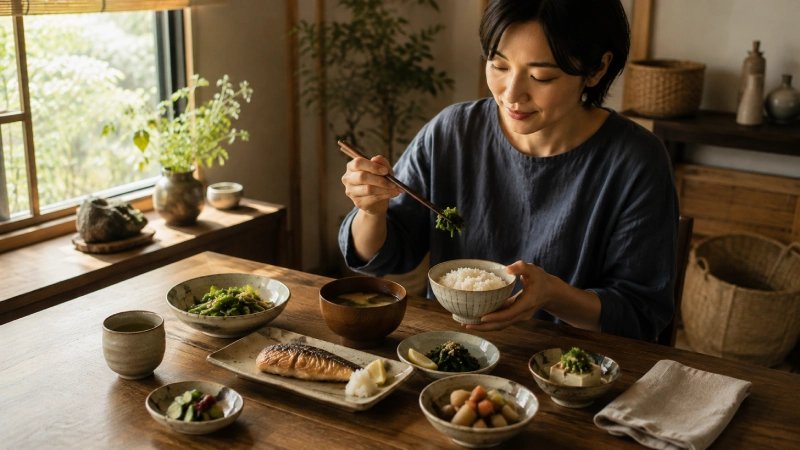
A big feature of Japanese meals is variety, because instead of making one huge main dish, a traditional plate tends to include several smaller components. Think rice, soup, fish, vegetables, pickles, and some side dishes too. This setup helps people reach balanced nutrition almost automatically since different food groups show up in one meal.
Smaller portions also make it less likely to overeat, while still letting you enjoy lots of flavors and textures, kind of like a small parade of tastes. Some research has pointed out that eating a wider range of foods can boost overall nutrient intake and support better long-term health, so the pattern is not only traditional but also practical.
Following The “Ichiju Sansai” Principle
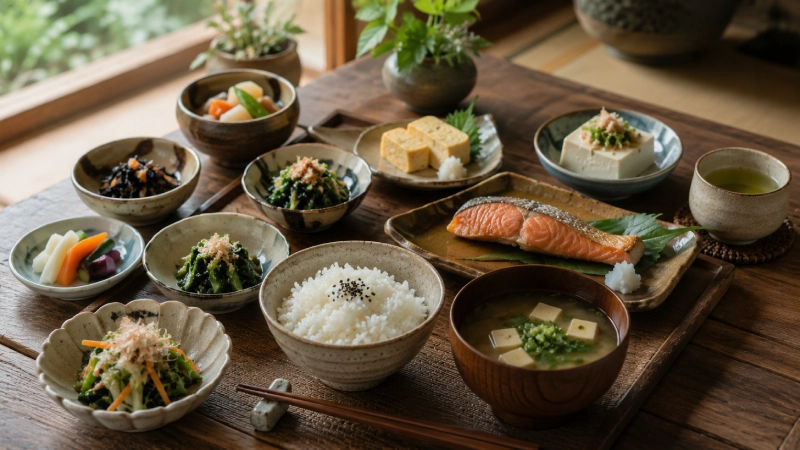
Traditional Japanese meals often follow the idea of Ichiju Sansai, which is usually translated as “one soup and three side dishes.” A typical meal includes:
- One bowl of rice
- One bowl of miso soup
- One main protein dish
- Two vegetable-based side dishes
- Pickled vegetables
This structure naturally provides carbohydrates, protein, healthy fats, fiber, vitamins, and minerals, without needing complicated meal planning or anything. Even though modern lifestyles have simplified some meals, the philosophy behind Ichiju Sansai still shows up in Japanese home cooking. It is not like it vanished or anything; it just got quieter sometimes
Prioritizing Seasonal Ingredients
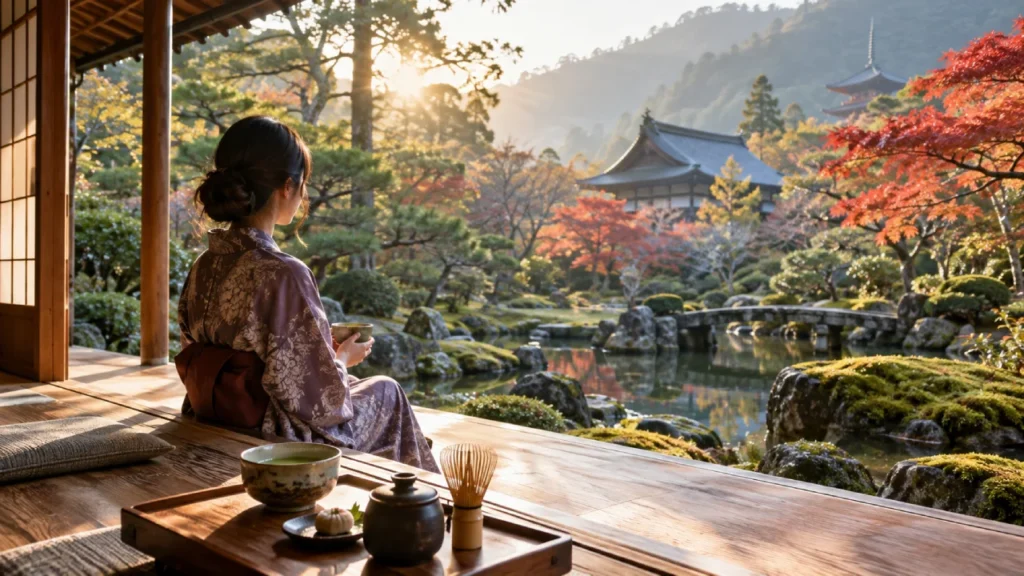
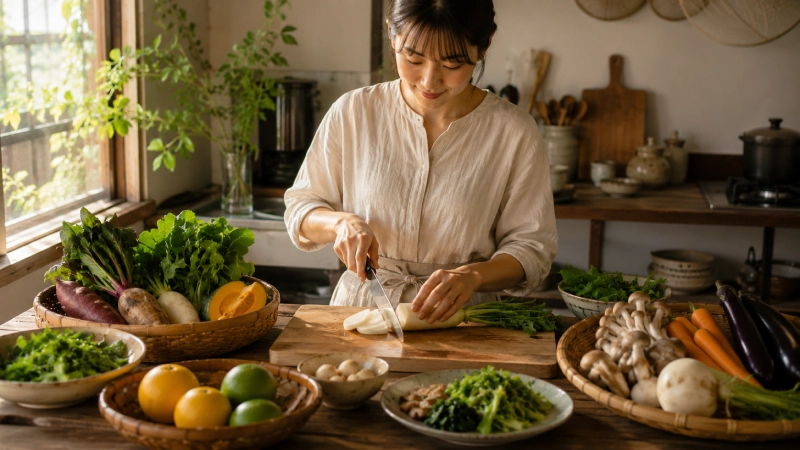
Seasonality plays a big role in Japanese cuisine. Rather than eating the same foods throughout the whole year, many households prepare meals using ingredients that are naturally in season.
Seasonal produce often offers:
- Better flavor
- Higher nutritional value
- Lower environmental impact
- Greater variety across the year
Eating with the seasons also builds a stronger connection with nature, and it pushes dietary diversity too. Kind of like you end up mixing things without forcing it
Rice As A Foundation Rather Than The Entire Meal
Rice is absolutely a staple of Japanese cuisine, but it is rarely the only star.
Instead, rice works as a neutral base that complements vegetables, seafood, fermented foods and soups. Unlike hea ily processed carbohydrates, plain steamed rice is typically eaten without rich sauces or excessive fats, so the whole meal stays balanced.
The focus is more on moderation than on cutting carbohydrates out completely
Eating Plenty of Fish
Fish is an important protein source in traditional Japanese diets. Salmon, mackerel, sardines, tuna, and many other varieties are usually eaten throughout the week. Fish provides high-quality protein
- High quality protein
- Omega-3 fatty acids
- Vitamin D
- Selenium
- Vitamin B12
Studies have connected regular fish intake with better cardiovascular health and brain function. While meat consumption has increased in Japan over recent decades, seafood remains an important part of many households’ diet, even if people think about it differently depending on where they live. And then there is this whole other layer, like fermented foods, that kind of quietly keeps showing up.
Including Fermented Foods Daily
Fermented foods have been part of Japanese cooking for a long time, kind of woven in, not really “added” later. You see it in popular everyday items such as miso, Natto, soy sauce, and pickled vegetables (Tsukemono).
These foods contain helpful microorganisms that may support gut health, though the results can shift based on someone’s health situation and also what else they eat.
They also bring a more distinct taste that can lower the urge to lean on too much sugar, or to depend on unhealthy fats for satisfaction.
Enjoying Soup As Part Of Every Meal
Many Japanese meals start with soup, especially miso soup. Soup does a few jobs: adds hydration, helps people eat more vegetables, creates that “I feel full” signal, and brings warmth and comfort. Since bbroth-basedsoups are usually relatively low in calories, they help balance the whole meal, while still giving useful nutrients.
Mindful Eating Through “Hara Hachi Bu”
One of Japan’s eating philosophies is Hara Hachi Bu, and it’s often associated with Okinawa. The idea is basically: eat until you are about 80% full. So instead of going all the way until you feel stuffed, people stop when they are comfortably satisfied.
Some studies have suggested that mindful habits like this can help regulate calorie intake and support long-term weight management.
More than that, it nudges people to notice hunger and fullness cues rather than reacting to external triggers like portion size or what someone else is doing.
Minimal Processing And Fresh Ingredients
Traditional Japanese cooking leans heavily on fresh ingredients, with relatively simple prep methods; for many d ily dishes, steaming, grilling, simmering, and lightly stir-frying are preferred over deep frying. Seasoning is often kept light too, so the natural flavors can come through, not get buried under heavy sauces. This style tends to minimize excessive added ingredients, and in general, it keeps the ingredients more respectful of the original taste.
Why These Habits Tend To Work
The power behind Japanese food habits is not just because of one little “superfood”- type thing, not really. It’s more that the benefits show up when a bunch of healthy behaviors get mixed, in a kinda steady way, like
being aware of portions:
- having dietary variety
- eating with the seasons
- going for fresh ingredients
- choosing seafood regularly
- adding fermented foods
- eating mindfully
- keeping calorie intake moderate
- sticking to routines that feel normal
That whole set can last longer, because it doesn’t have harsh limits or those short-term diet phases that people rarely maintain.
Adapting Japanese Food Habits To Everyday Life
You don’t have to tip your whole diet, or go all in. You can try it slowly, with smaller moves like :
- Serve smaller portions.
- Add another vegetable side dish.
- Eat more seasonal produce.
- Include soup at lunch or dinner.
- Pick fish more often.
- Drink unsweetened tea.
- Slow down while you eat.
- Stop before you feel stuffed just stop.
Even tiny adjustments, if you actually practice them consistently, can add up over time to a better eating pattern, not just “a moment.”
Conclusion
Japanese food habits seem to show that eating “balanced” doesn’t have to be this whole complicated thing. Rather than sticking to very strict diet rules or cutting out whole food categories, traditional meals from Japan lean into variety, portion restraint, freshness, and some quiet mindfulness. And yeah, these ideas still feel woven into everyday life, going back for generations, so the food ends up being both nourishing and genuinely enjoyable, not just “healthy on paper” or whatever.
Every culture has its own ways of staying well, but the Japanese way brings lessons that we can borrow pretty easily anywhere. If we try smaller servings, seasonal ingredients, and a wider range of foods, then add mindful chewing or mindful eating into the mix, regular meals can turn into something that supports physical strength as well as overall calm well-being. Well-being and balance aren’t about being perfect; it’s more about making the same steady, intentional choices day after day, even when it’s not perfect, and even when the schedule is messy.