

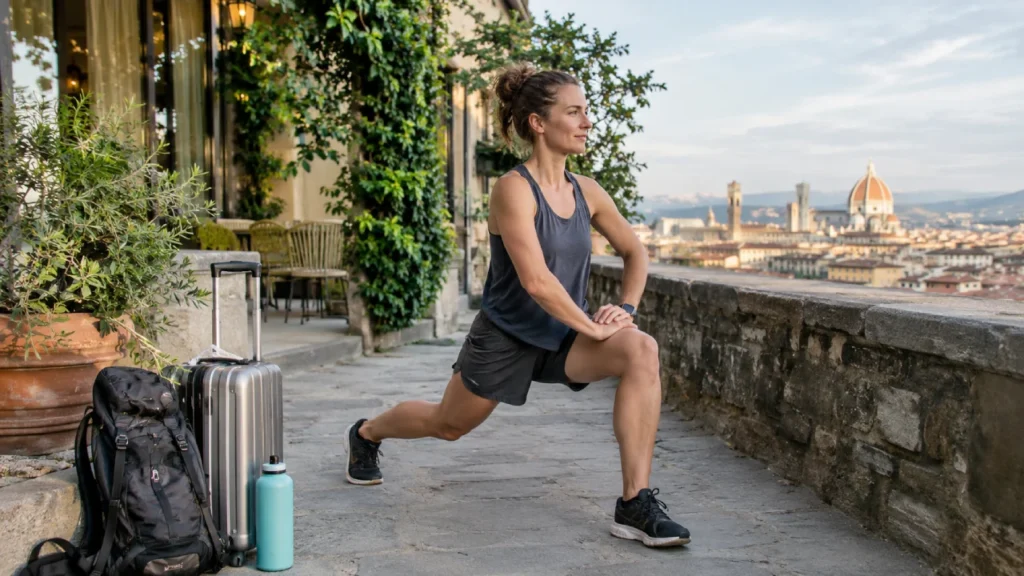
Aim for steady habits and enjoyment. Do not try to “make up” for every missed session. Travel can mess with your schedule in a hurry. Some mornings that once meant exercise now turn into a slow look at sights. Meals land at odd times, and you end up eating when you did not plan to. Long car rides or train trips also take over. Before you realize it, your usual workout routine can disappear.
That said, you can still stay active without a gym. You do not need fancy tools or a strict timetable. Small habits work. Walk around a new neighborhood. Take stairs when they are there. After a long ride, do a little stretching. If you have a moment, try a quick set using your own body.
On a trip, the goal is not to match a hard plan. You want to stay flexible. You want to feel okay. You just need movement that fits what the day already looks like.
Use Walking as a Form of Workout
Start with walking. When you choose to explore on foot, you tend to move more without trying so hard. Wander through older streets. Walk between spots that are close. Take the scenic route to lunch or dinner. You may cover a lot of distance, and it still feels like travel.
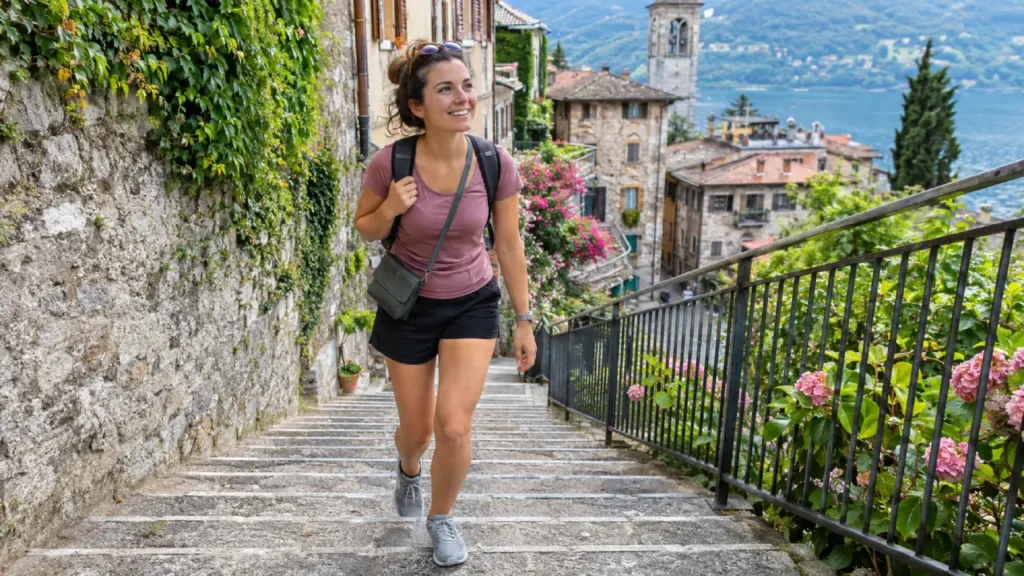
Do not get stuck on step counts. Pay attention to openings during the day. A short walk in the morning can help. A walk after dinner counts too. Even moving around a local market can add up.
Comfort is key. Wear shoes that feel right. This matters more on uneven paths, cobblestones, and any day where you expect to be on your feet for hours.
Begin With a Quick and Simple Routine
You may not fit a full workout into a trip plan. Still, 10 to 15 minutes is usually doable. A light morning flow can use bodyweight squats and lunges. Add glute bridges and wall push-ups or push-ups on a steady surface. Include planks too, plus easy mobility work. You can scale the reps to match your level and the space you have.
Even a short stretch of training can make you feel more alert after a new bed. You do not have to push hard each day. If your schedule is full of walking and tours, gentle stretching and movement drills may fit better than a tough session.

Use the Hotel Space
A hotel room can work as a workout corner even if you have little gear. Movements like squats, reverse lunges, calf raises, push-ups, and planks take up limited room. A few rounds can give you a full-body routine. You can do it without shifting furniture or drawing attention.
This also holds for hostels, guesthouses, and rentals. A small open patch is often enough for basic mobility and strength drills. Aim for steady control in each move. Skip the idea of copying a gym session.
Use the Stairs Whenever You Can
Stairs can add small amounts of movement during a day out. If you can handle a short climb, taking stairs instead of an elevator for a few levels can help you stay more active. Some people also choose a quick set of step-ups or a few short climbs if they feel steady doing it.
Still, you should not feel forced to do it. Heavy bags, a recent injury, or an unfamiliar building are solid reasons to use the elevator. The goal is to make the trip easier to manage, not to drain you.
Stretch Your Body After a Long Journey
After flights, trains, buses, or long drives, the body can feel tight from sitting. Once you arrive, a few minutes of easy motion can help you feel looser. You can try shoulder rolls, neck movement, ankle circles, gentle twists of the spine, hip stretches, and calf stretches. No tools are needed for these.
If the trip is long, you can also stand and walk for a bit when it is safe and allowed. These short movement breaks matter most when travel takes hours, and then you plan to sightsee.
Pack a Small Set of Workout Gear
Many trip workouts can happen with no gear. Still, a couple of light items can help. A resistance band barely takes up room. It can make basic moves feel less boring. A thin skipping rope can work too. Only bring it if you have a safe open area. Do not treat gear as a must. If you leave the band behind, you can still train. Use your body instead. Walking counts. Mobility work also fits travel life.
Make Up for Missed Workouts by Exercising Outside
Travel often gives chances to stay active in new ways. You are not stuck with the usual gym routine. Go for a hike, ride a bike, or swim. Try kayaking if that is available. Join a walking tour. Even simple beach games can get you moving.
Pick an activity that fits where you are. A hilly area may suit hiking. A seaside place may suit swimming or cycling. Then the goal feels bigger than just fitness. You are seeing the place, taking it in, and taking steps at the same time.
Make a Habit of Walking After Eating
Mealtime can be a good time to add movement. After dinner, instead of heading straight back to the hotel, travelers can stroll at an easy pace in a nearby, well-known spot. A short walk after breakfast can work too. It helps people see the area before the main plans start.
The pace does not have to be high. It does not need to last a long time either. Even a calm walk can help when most of the day feels like sitting or waiting in transport.
If the neighborhood is new, travelers should stick to streets that feel safe and visible. Choose routes with other people around, and follow the local safety tips.
Do Not Skip Recovery
Being active on a trip does not mean you push yourself all day. Travel can wear the body down in its own way. Lots of walking, jet lag, hauling bags, and sleeping somewhere unfamiliar can all add to tiredness.
So rest days are fine. A lighter day can look like reading, stopping for coffee, enjoying a viewpoint, or taking an easy stroll. That still counts as smart travel.
Recovery is also about the basics. Sleep matters. Water matters. Food matters. These can shape how you feel during the day, just like exercise can.
Travel Food Should Stay Flexible
When you are on the move, local meals are part of the trip. So you do not need to be overly strict at every meal. Aim for a steady mix when you can. Add vegetables and fruit, choose protein when it fits, and drink enough fluids so you feel good on busy days.
If your plans run late, bring easy snacks. Fruit, nuts, or yogurt work well. They can keep you from getting stuck waiting for the next meal. Do not try to “pay back” every treat with extra workouts. Eating well and moving around are both part of travel. Make time for movement, but let it help you enjoy the day.
Try a Short Travel Routine
On days when time is tight, a ten-minute flow can help you keep the habit. A simple set might be:
- Squats
- Reverse lunges, switching sides each rep
- Incline push-ups on a firm surface
- Glute bridges
- Calf raises
- Plank, or another core move that feels fine
Do each part for a reasonable number of reps. Rest briefly between moves. This can add up to a few minutes of full-body work. If you are new, start with one round or two. If you are more fit, extend the time or add another round. Skip any move that brings pain. Swap it for something safer, or stop and rest.
Use Technology Without Feeling Pressurized by It
Fitness apps, smartwatches, and maps can support trips and help people stay aware of what they are doing. Still, they should not turn into a rulebook. A step count can nudge someone to pick a nicer walking path. A short stretch or mobility clip can help when a person is on their own and needs a simple plan.
Numbers also do not have to be treated like grades. If a day has fewer steps because of bad weather, tired legs, or a long ride, that does not mean the trip failed. On a holiday, the bigger win is staying steady over time. Hitting the same target each day is not the main goal.
Match Your Movement to Where You Are
What you are doing should fit the place you are in. In hot or sticky climates, a walk early in the day or later in the evening often feels better. When it is raining, indoor movement like gentle mobility work or bodyweight exercises can take the place of going outside. At higher elevations, some people need a bit of time to adjust first. Pushing hard right away can be rough. So local reality should guide you more than a fixed workout plan.
Keep Your Activities Social
Being active can also be a way to share time with the people you travel with. You can join a group walk, book a bike ride, or go for a hike. Families might enjoy a park day, and friends could pick an active outing rather than sitting inside for the full day. When movement feels shared, it can seem less like work. It turns into just another part of the trip.
Simple Travel Movement Plan
Morning
Spend about 10 minutes on light stretching or bodyweight moves.
Daytime
Walk when it makes sense.
Pick sightseeing that keeps you moving.
On the move
If you can, pause for a short, safe stretch break.
Evening
Take an easy walk.
Or do a few gentle stretches to wind down.
Rest days
Let your body recover.
Choose fun low-effort activities instead.
This outline can fit many trips.
It can shift based on the place and the daily plan.
Conclusion
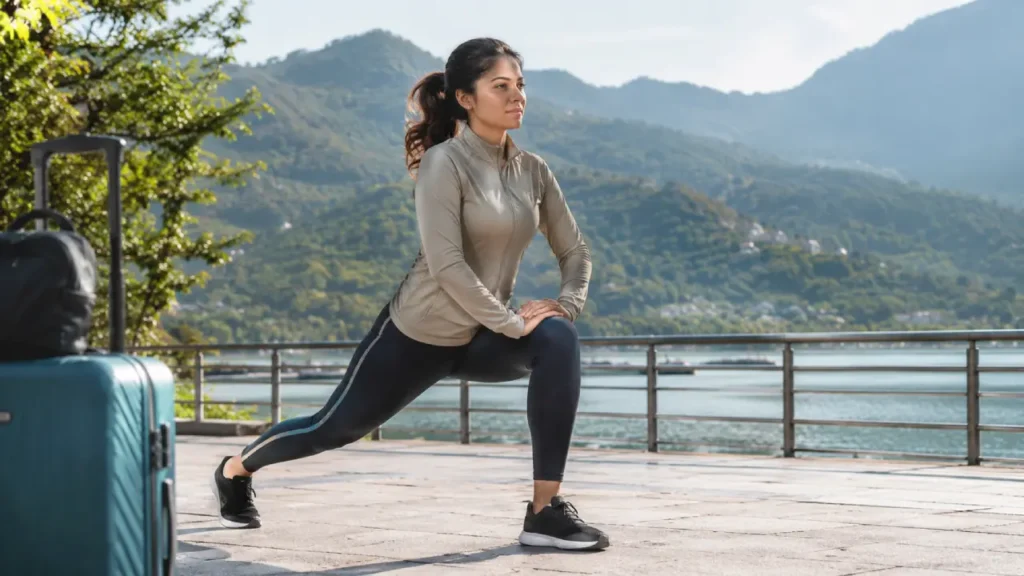
You do not need a gym or fancy tools to stay active while traveling. A new city often gives chances to move. Climb some stairs if it is convenient. Stretch after a long ride. Take an easy hike in nature. Or do a short bodyweight routine when that fits.
The best way is to make movement part of the day. Rather than setting aside a separate workout time, use the trip itself. Walk to sights, choose hands-on activities, and use spare moments for a little stretching.
Also, keep the trip as a real break. If you miss a workout, that is fine. If one day is calm, that is fine too. Your goal is to come back feeling good and ready to move, not drained from trying to follow a perfect plan.