

Screens show up in daily life almost everywhere. Many adults use phones for work, messages, and fun. Kids often use tablets, computers, or TVs for class and play. With technology built into routines, most households do not need to cut screens out completely or pretend they do not exist.
A screen-free evening can work in a simpler way. Instead of banning devices, a family can pick a set time and ask everyone to put their items away on purpose. This time is meant to reduce constant interruptions. No more quick checks for alerts. No separate shows on different devices. Less time spent in social feeds. During that window, it can be easier to talk, play games, cook together, read, or just sit side by side. The goal is to make it feel good. It should not turn into another rule everyone resents.
Begin With a Short, Honest Plan
You do not need to go from zero to “all night.” Try 30 minutes or one hour at first. If it goes well, you can add more time later. Pick a steady slot so it is easier to remember. For instance, a family may choose the time during dinner plus the next hour.
Also think about real duties. A parent might need to take a key call. A child might have homework that still requires a screen. It helps to allow fair exceptions. That way, the idea stays flexible. This is about planned family time, not a contest about who lasts the longest without using a device.
Set Up a Family Device Spot
A clear, physical setup can help everyone adjust. Pick a shelf, a basket, or a small charging place for phones and other personal gadgets during the quiet time. Put the items there before you start the screen-free part.
Let adults join in too. If parents keep checking their phones while asking kids to stop, the rule can feel uneven. Some people still must stay reachable for work or for real needs. In those cases, keep devices on hand only for real reasons. Skip the extra pings, feeds, and games. The goal is to cut distractions. It is not meant to scare anyone about technology.
Make Dinner a Team Moment
Dinner can start the screen-free stretch in a simple way. Instead of eating while the TV runs or while everyone scrolls, the family can sit together and stay focused on the meal and talk. The food does not have to be special. A basic night during the week can still help you reconnect.
Parents can invite real conversation with questions that do not have a yes or no answer. Kids can share a thing they learned, a funny part of the day, or something they want to do next. Adults should join in, not just ask questions to children.

Over time, these chats can turn into a steady family habit.
Cook Together
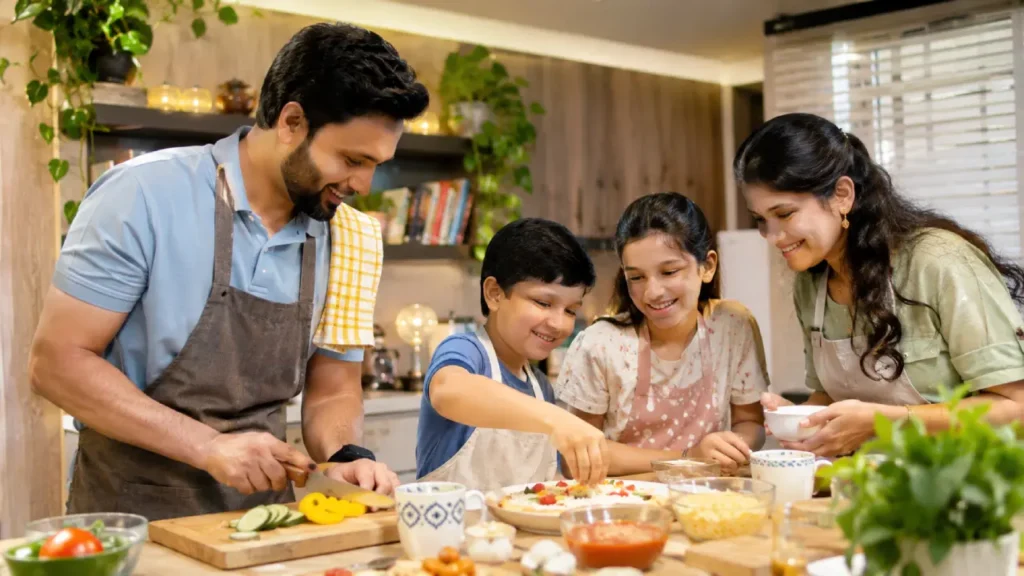
Cooking is another way to keep time away from screens and still stay busy. Kids can do jobs that fit their age. They can rinse vegetables, stir ingredients, set the table, or measure small amounts. Older kids can handle more steps and help with a bigger part of the meal.
Families can pick one night and test a recipe they have not tried before. It is fine if the food is not perfect. Getting ready is still part of the fun you share. Cooking also gives people a reason to talk and focus on one task. That can make leaving screens feel less awkward.
Try Board Games
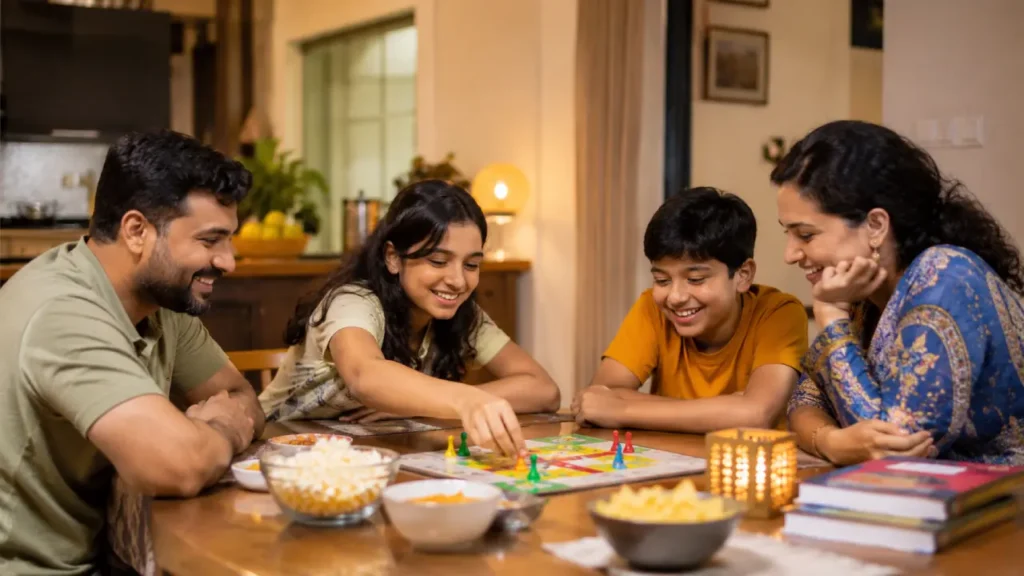
Board games and card games can replace digital fun in a simple way. You do not need many games. Just a few that work for different ages can still give variety. Card games, puzzles, chess, word games, trivia, and strategy games can all fit here.
For younger children, games that last less time can be easier to enjoy. Older children may like games that involve plans or head-to-head play.
Not every game has to turn into a big contest. The point is to spend time together. If winning and losing cause fights, switch to games where everyone works as a team.
Try Hands-On Creative Fun
A screen-free night can feel less like a loss when you treat it as an addition. You can use crayons, paper, paint, or simple craft items. Some people like to write short tales. Others may enjoy building something small.
You can also work on one shared idea with everyone pitching in. One easy plan is to pick one theme, then let each person draw and show what they made. After that, each person can talk for a minute about their work.
You can also make decorations, put together a scrapbook, or try a simple DIY task with stuff you already have at home. It does not have to look polished. What matters most is that you made it together.
Read Together
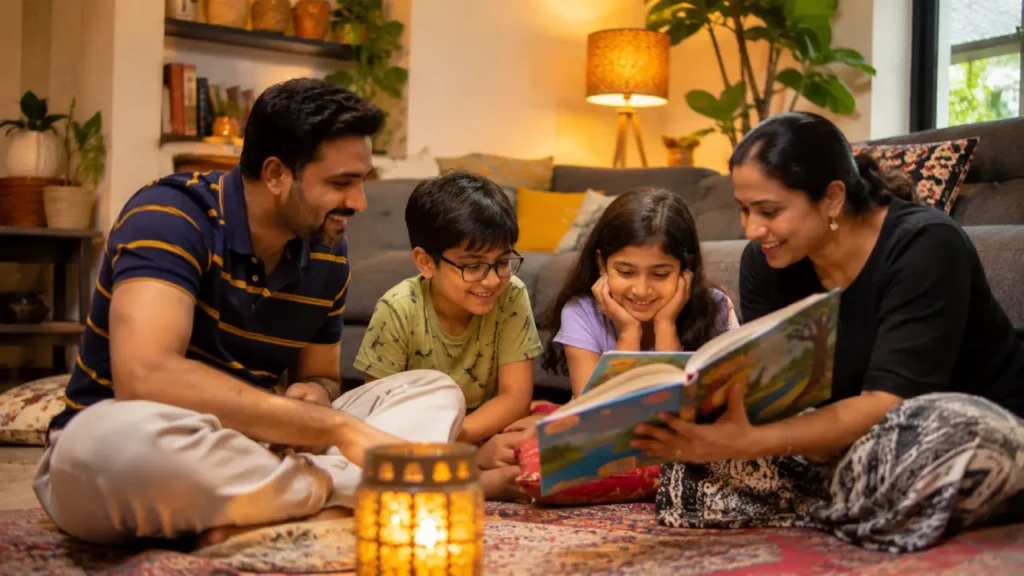
Reading can give the evening a calm shift. Grown-ups can read aloud for younger kids. Older children can pick their own books to use. You can choose one short story as a group, then talk about it right after.
Another simple way is to have everyone read on their own in the same space. You still share the time even if each person is focused on a different book. This can work well near the end of the night, when the home is starting to settle down.
Final Thoughts
A screen-free family night does not mean you have to give up tech. You also do not need hard rules for every little thing. You just need to set aside time on purpose. In that time, people can pay attention to each other. Fewer digital pings help.
You can start small. Try a phone-free meal first. After that, do something calm like a board game. Or take a short walk. You can read a book together. You can also just talk.
If you cook at home, invite the kids. Let them help with parts of the meal. Also let them pick what you do next. When they choose, they usually stay more interested.
One more point matters a lot. Parents should join in. If adults act like this is shared family time, not a punishment for kids, it is easier to keep going.