

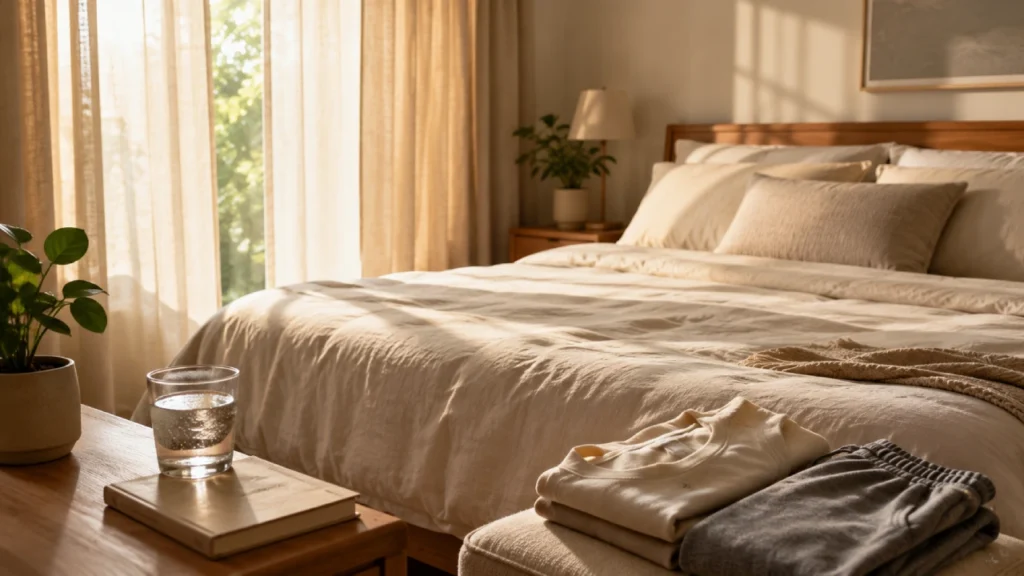
A small bedroom does not have to feel tight or stressful. With a few changes, a compact room can start to feel like a calm spot to unwind at night. You do not have to buy big pieces of furniture. You can also skip a full room rebuild. Focus on the basics. Lighting, bedding, storage, temperature, and clutter all play a part.
A bedroom meant for sleep is usually dark. It is also quiet and cool, with a level of comfort that feels right. A sleep-friendly setup matters more than you might think. Even small swaps can make the day end feel easier.
Start by Clearing Extra Stuff
A small bedroom can feel easier to live in when you cut down on clutter. Clothes, bags, books, and random items can pile up fast. When that happens, the room can start to feel tight. A messy space can also make it harder to relax at night. The Sleep Foundation points out that seeing clutter may raise stress.
It also suggests you set aside time to put away things you no longer need. You do not need a full makeover in one day. Try the areas around the bed first, then the floor. Keep the things you use often within reach. Put the rest where they belong. Even a short tidy-up right before bed can help you feel calmer.
Focus on the Bed
In a small room, the bed becomes the main piece of furniture. So it helps to make it comfortable. Pick a mattress that supports you well. Choose a pillow that matches how you sleep. Side, back, or stomach sleepers often need different support. Bedding matters too. If you run hot, lighter breathable sheets can work better than thick layers.
If you get chilly, keep one extra blanket close by. That way you can add warmth without turning the whole bed into a sauna. The Sleep Foundation says to choose your mattress, pillow, and bedding based on how you feel and what you prefer.
Use Storage That Takes Less Room
In a small bedroom, storage can turn into a real problem fast. Instead of buying bigger pieces, try to use what you already have. Under-bed bins work well for things you only use sometimes. That can include winter clothes, extra sheets, or other low-frequency items. Use the walls too with tall, thin storage.

A narrow shelf by the bed can do the job of a wider nightstand. Hooks on the wall can hold a bag or items you grab often. Small baskets are handy for that tend to scatter. The aim is not to cover every inch with containers. If you add too much, the room can start to feel packed. Pick options that actually solve a daily issue.

Keep Walking Space Open
When the floor is clear, a compact room often feels less tight. Try not to place extra furniture in paths you use every day. Pay extra attention to areas near the bed and around the door. You should be able to get from the bed to the door without squeezing past things. This is not only about comfort.
Clear paths also matter for safety. The CDC and NIOSH advise keeping walkways open, especially if you move around at night. If you use a rug, make sure it fits the available space. It should not block movement. In a tight room, a smaller rug near the bed is usually easier than a large one that covers most of the floor.
Pick Light That Feels Gentle
The right lighting changes the mood of a small bedroom. During the day, let in as much daylight as you can. Open up the room with natural light when possible. When evening comes, shift to softer, lower-brightness lighting. A dim lamp near the bed can be enough for reading or getting ready. It can also avoid bright glare that spreads everywhere.
Keep screens out of the bedroom
In a smaller bedroom, it is easy to treat the bed like a catch-all spot. You may scroll, watch clips, and reply to messages there.
Still, if you make the bed feel like a place just for sleep, the room can feel calmer. When you can, do not place your phone near the pillow. Try to cut down on screen time right before you get into bed. The Sleep Foundation explains that devices can add light and keep your mind switched on. That can make it harder to relax and fall asleep. You can also use Do Not Disturb. Turn off or silence alerts you do not need, so your phone does not keep pulling you awake.

Work on the room temperature
For a tight bedroom with little airflow, heat can be a bigger problem. If the room gets too warm, sleep can feel harder to manage. The Sleep Foundation often suggests a range near 60 to 71 degrees Fahrenheit. That said, what feels right can differ from person to person. You do not have to lock into one exact number. If you have them, use a fan, air conditioning, or other ventilation. Match your bedding to the weather too.
Final Thoughts
A small bedroom can look good and still help you sleep well. You do not need to redo everything. First, clear out extra items. Leave the floor as open as you can. Next, pay attention to what affects comfort every night. That means the mattress, your pillow, and your bedding. Also check the lighting, the room temperature, and how loud or quiet it is.
Use storage that goes up or slides under the bed. This helps when space is tight. For nighttime, pick gentle light instead of bright glare. If you can, keep screens out of the sleep zone. Even a few small personal items can make the room feel cozy. You can do this without piling the place up. In the end, the best setup is the one that feels calm. It should be comfy and simple to keep up.