


India does not give you the luxury of packing once and forgetting about it. A single trip can take you from a 4°C mountain morning in Manali to a 38°C afternoon in Delhi and then to a humid beach evening in Goa, sometimes within the same fortnight. An Indian vacation wardrobe is necessary, as the same country that forces you to dig out a parka on the Rohtang Pass will have you sweating through a cotton kurta in Jaipur before the week is done.
Packing for Indian travel is, at its core, a problem of managing extremes without overpacking for any single one of them. The good news is that once you understand the logic of each terrain, the wardrobe decisions become significantly simpler. Here is a practical, terrain-by-terrain breakdown for the three most common Indian vacation contexts: the hills, the beach, and the city break.
Packing for the Hills: Layer or Regret It
Whether you are headed to Shimla, Mussoorie, Dharamshala, or further up to Spiti and Ladakh, the fundamental rule of hill packing is never pack for Instagram photographs. Those golden hour shots of light sweaters and sun-dappled meadows are real, but they represent roughly four hours of the day. The 11 PM reality in most hill stations is a different story entirely, and first-time mountain travelers consistently make the mistake of packing for the former and suffering through the latter.
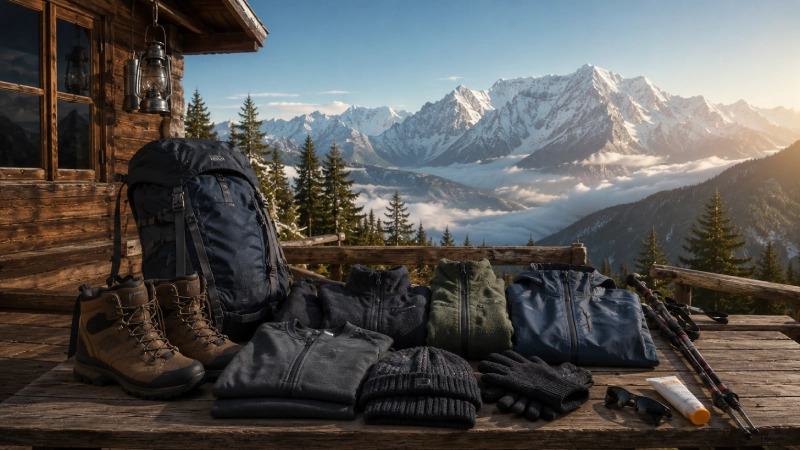
The system that works, across every elevation and season, is the three-layer approach.
- The base layer is your thermal or close-fitting moisture-wicking innerwear. For summer trips to Shimla or Nainital, a single set of light thermals handles the cold nights without bulk. For higher altitude destinations (Ladakh, Spiti, Kedarnath), two to three pairs of thermal innerwear are non-negotiable, even in June. These take up almost no space and make an enormous difference.
- The mid layer is where your warmth actually lives, be it a fleece jacket, a wool sweater or a combination of both. For most hill stations in Himachal Pradesh and Uttarakhand, a 200–250 GSM fleece is the sweet spot, warm enough for cold evenings and early mornings yet packable enough to not dominate your bag. Carry one heavier pullover for nights, and one lighter fleece for the afternoons when the sun is still up but the wind is cutting.
- The outer layer is your windproof, waterproof jacket and this one is genuinely non-negotiable regardless of season. Even summer hill stations like Shimla and Nainital see unexpected rain, and at higher altitudes, a sudden downpour without a waterproof shell is an unpleasant experience that can turn dangerous on mountain roads. A packable rain jacket that compresses into its own pocket is the single best investment for a hill trip.
For daytime on the mountain trails, breathable cotton shirts, quick-dry trekking pants or lightweight cargo trousers, and a wide-brimmed hat or cap round out the essentials. UV protection matters significantly more at altitude, as the sun at 3,000 meters above sea level is not the same sun as the one in your home city, and sunburn happens faster than most hill first-timers expect. Pack sunscreen with SPF 50 and a pair of good UV-blocking sunglasses. Also add lip balm with SPF, since the dry mountain air, combined with UV exposure, makes chapped lips an almost universal hill station souvenir.
For footwear, sturdy closed-toe trekking shoes or hiking boots handle both trails and uneven mountain roads. If you are staying in a town rather than trekking, comfortable walking shoes with grip work fine for daytime, but flip-flops are of limited use above 2,000 metres once the sun goes down.
One practical note that experienced hill travellers always mention is to carry motion sickness tablets. Routes like Manali to Rohtang, Gangtok to Nathula, or almost any road in Spiti involve hours of winding mountain bends, and the altitude makes nausea worse for travellers not accustomed to it.
Packing for the Beach: Breathable, Versatile, and Context-Aware
Beach packing in India requires thinking about two things simultaneously:

- Physical environment (heat, humidity, salt water, sand)
- Cultural context (which beach, what activities and how conservative the local setting is)

The physical environment equation is simple. Cotton, linen and other breathable fabrics are the only sensible choices in coastal India’s heat and humidity. Synthetic fabrics that feel comfortable in an air-conditioned environment become miserable in 32°C seaside humidity within twenty minutes. Pack light, loose and natural such as cotton tees, linen shorts or trousers, cotton shorts and flowy dresses or palazzos. Everything should dry quickly, because beach days involve a rotation of wet and dry that tests any fabric.
The cultural context is slightly more nuanced, and it largely depends on your destination.
Goa has a well-developed tourist beach culture where swimwear is entirely normalised on the major beaches, and the beach-to-restaurant wardrobe transition is easy with the right pieces. A kaftan is the most efficient piece in a Goa bag, versatile enough to move from a beach morning to a shack lunch to a sundowner without changing outfits, and it compresses to almost nothing in your bag. For evenings, Goa’s beach club and restaurant culture is fashion-forward, with a printed midi dress, a co-ord set in a richer fabric, or white linen with statement earrings transitions effortlessly from the beach promenade to an evening out.
For Kerala, the wardrobe logic shifts slightly toward modest elegance. Light cotton kurtas, linen sets and comfortable midi dresses suit Kerala’s blend of beach time, backwater excursions and cultural visits. Many travellers find that a Kerala trip is where a versatile kurta becomes the hardest-working piece in the bag, appropriate for a temple visit in the morning, a houseboat afternoon and an Ayurveda resort dinner in the evening.
For any beach destination, pack polarised sunglasses as the coastal light reflection is significantly more intense than city sun, and the difference in eye comfort over a full beach day is considerable. A waterproof tote bag or dry bag, SPF 50 sunscreen in a generous quantity, and a good pair of water-resistant sandals or flip-flops complete the practical essentials.
Do not overpack for a beach trip. The golden rule among experienced Goa regulars is to pack light and buy locally since beachside market finds, local boutiques and flea markets offer inexpensive, on-trend resort wear that you were probably going to buy anyway.
Packing for City Breaks: The Indian Vacation Wardrobe Essential
India’s major cities (Delhi, Mumbai, Jaipur, Kolkata, Hyderabad, Bengaluru) span a wide range of temperatures depending on the season, but the packing logic for urban India is more consistent than either the hills or the beach.
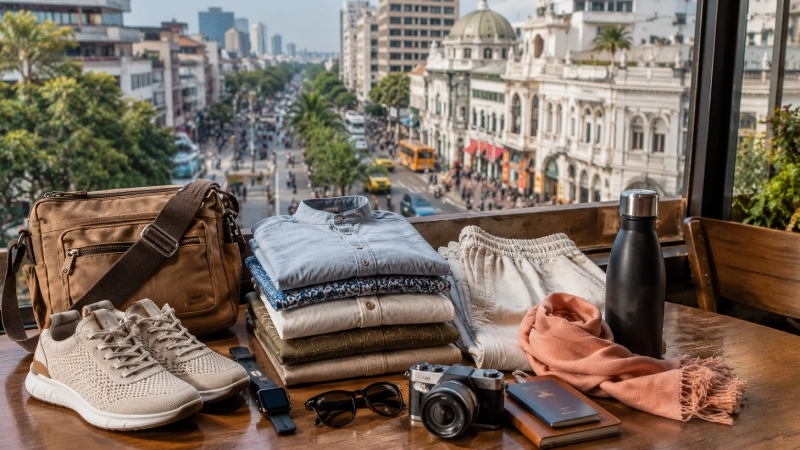
The single most useful garment for an Indian city break is the cotton kurta. This is genuinely the most practical clothing choice available. Kurtas are loose enough to be comfortable in heat, modest enough to enter most religious sites and heritage properties without an additional cover-up, available in every price range and style from streetwear to resort and widely sold in every city market if you need to supplement your wardrobe on arrival. In cities like Delhi, Mumbai, and Kolkata, Western dress is entirely standard, but a kurta moves through every context — heritage sites, street markets, rooftop restaurants, and family visits — with zero friction.
For temple visits and religious sites, the essentials are covered shoulders and covered knees. A lightweight cotton stole or dupatta weighs almost nothing and solves every modesty requirement when draped over a sleeveless top. Loose linen trousers or cotton salwar work for both women and men as a smart-casual city daywear option that handles the heat and the context simultaneously.
Comfortable walking shoes with good arch support are essential for city breaks in India since sightseeing days involve significantly more ground-covering than most international tourist itineraries, and cobblestoned heritage sites, uneven pavements, and long museum corridors demand footwear that can handle four to six hours on foot. One pair of slightly smarter shoes for evenings at a restaurant or rooftop bar adds versatility without taking up much space.
For city breaks, a compact anti-theft bag or crossbody with a secure zip is worth carrying for busy markets and tourist areas in cities like Delhi and Mumbai, where pickpocketing in crowded spaces is a common enough occurrence to warrant the precaution.
The Cross-Terrain Essentials That Go in Every Indian Bag
Regardless of whether you are heading to the mountains, the coast, or the city, a handful of items belong in every Indian vacation bag.
- A refillable water bottle with a filter (saves both money and the plastic guilt of buying bottled water multiple times daily).
- A small first-aid kit (rehydration salts, antidiarrheals, basic pain relief, and personal prescription medications with two extra days’ supply) covers the most common travel health scenarios across all terrains.
- High-SPF sunscreen in a quantity (large enough to last the trip is cheaper bought at home than at a tourist destination).
- A universal power adapter for Type D (and sometimes Type C) sockets handles the inconsistency of Indian accommodation.
- Wet wipes and hand sanitiser (because Indian travel involves a level of on-the-go hygiene management that most people underestimate until they are three hours into a highway road trip with no services in sight).
India rewards packing with intention and leaves the overpacker dragging a bag that was never necessary. Pack for the terrain, buy what you need locally, and leave room (literal and psychological) for the trip to surprise you.