

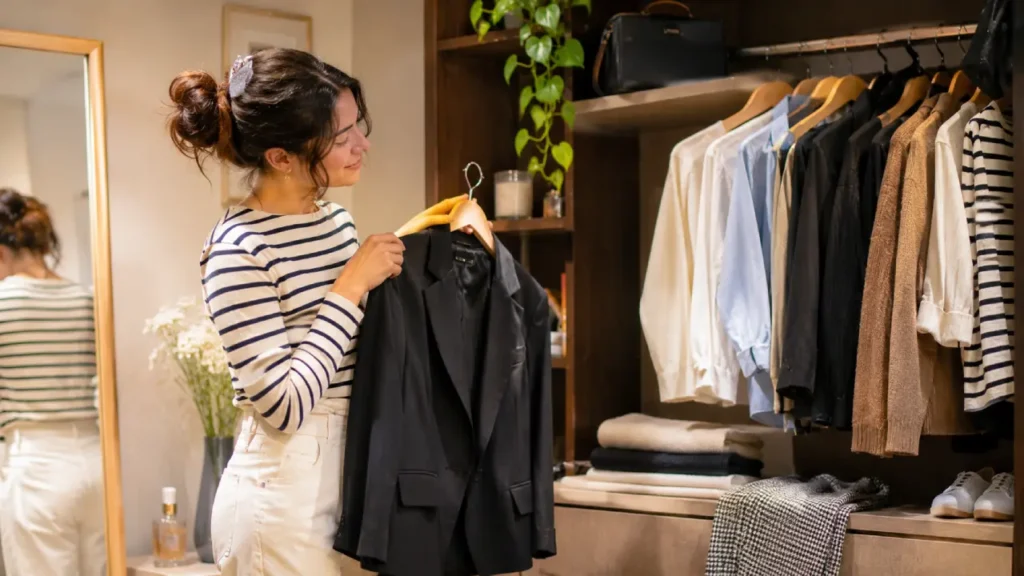
French Wardrobe Basics: Getting ready each morning can feel harder than it should, especially when your closet has items that never match. The French way of dressing takes a different route. It leans on fewer dependable pieces. It also uses easy mix-and-match choices. The goal is clothing you can wear again and again without thinking too hard.
People often describe this style as calm and refined. Still, it is not about strict rules. It is about choosing items that feel right for you. For many outfits, a good button-down, comfortable pants, a simple sweater, or a jacket that works with more than one look can do the heavy lifting.
This can be a big help for daily life. When your closet is built with care, you spend less time hunting for outfits. You can put together a neat look with less effort.
French Wardrobe Basics: Start With Basics That Actually Fit
A practical closet starts with clothes that sit well on your body. A white or neutral shirt is a solid option. A plain T-shirt helps too. Straight-leg trousers and jeans that fit the way you like can make a lot of combinations. You do not need to chase pricey labels. A well-made piece that stays in shape after regular wear can be a better choice than something costly that you barely use.
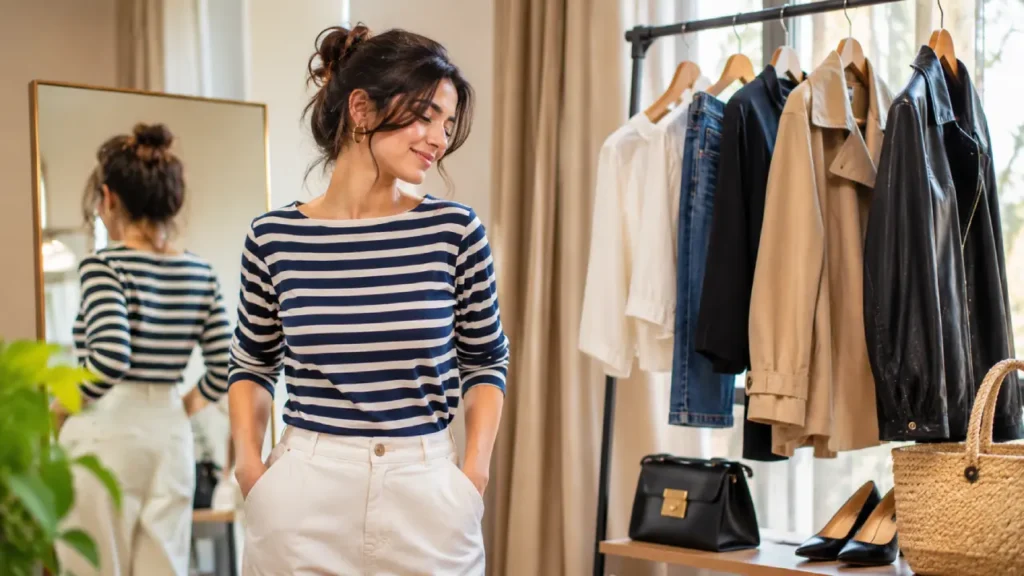
A good fit is not one style only. It depends on how you feel, what suits your shape, and what fits your day. The point is simple. Choose items that feel comfortable and ready. You should not have to fix your clothes all the time.
Pick a Calm Base Shade
French-style wardrobes usually lean on a small set of colours. You can use black, white, navy, beige, grey, cream, and denim as the base. These colours mix well with each other. That helps you build outfits without spending too long deciding.
This does not mean you must skip colour. Add small touches like a red bag, a striped top, a green scarf, or bright shoes. Those bits can bring character to a mostly neutral look. When you start with flexible colours, you can get more outfit options from fewer items.
Get a Solid White Shirt
A plain white shirt is a key piece for a wardrobe. Wear it with jeans for an easy feel. Tuck it into tailored trousers for work. Or put it on over a simple dress for a layered look. You can also wear it slightly open over a T-shirt when you want something more relaxed.

Fabric and shape matter. Cotton often works for daily wear. A softer or more fluid fabric can suit dressier plans. The main point is fit and real use. Choose a shirt that matches how the person actually lives, not one you buy just because it is called a classic.
Choose Versatile Trousers
A few dependable pairs of pants can make getting dressed easier each day. Look for straight-leg trousers, tailored pants, or jeans that fit well. These items go with button-down shirts, plain T-shirts, sweaters, and jackets.
If you pick darker colors, mixing them is usually simpler. Lighter shades can also work, and they can give you more options. Aim for trousers that fit more than one situation.
If most of your day is school, relaxed denim may be the best call. If your days are more work-focused, try tailored trousers. Keep at least one more casual pair in the mix too. Do not ignore comfort. Clothes can look nice and still feel wrong after a while. If a piece is uncomfortable for hours, it will not stay in your rotation.
Add a Simple Knit or Cardigan
A light sweater or cardigan helps when the weather shifts. It also lets you stretch what you already own. Choose a basic knit that matches jeans, trousers, or skirts. A cardigan can go over a shirt or a dress without pushing your look too far.
In warm places, thick wool is often not ideal. Light cotton or breathable blends usually feel better. The main idea stays the same. Pick layers that match the local climate and that you can mix with your current clothes.
Keep a Jacket You Can Count On
A jacket with shape can make a basic outfit look more put together. A blazer is one choice, but it is not the only one. You can also go with a denim jacket. A trench coat works too. Even a short jacket or a light overshirt can help, based on what you wear now and on the weather where you live.
Pick the one that you can wear with many things you already own. If you wear jeans a lot, a blazer can add a nice change in look. If your style is more casual, you might get more use from a simple jacket for daily stops and trips.
Do Not Sleep on Stripes
Stripes are a key part of the French look. Many people think of the Breton stripe right away.
This style is popular for a reason. Stripes add interest, but they do not make outfits hard to match. A striped tee can pair with denim, pants, a skirt, or shorts. You do not need to buy a very specific version. A plain striped top in colors you already wear can do the job just as well.
Choose Shoes That Earn Their Place
Shoes affect how well your wardrobe actually works. Pick a pair you enjoy wearing. Loafers can be practical. Ballet flats work for many days. Clean sneakers are easy to style. Ankle boots fit a lot of seasons. Simple sandals help when it is hot.
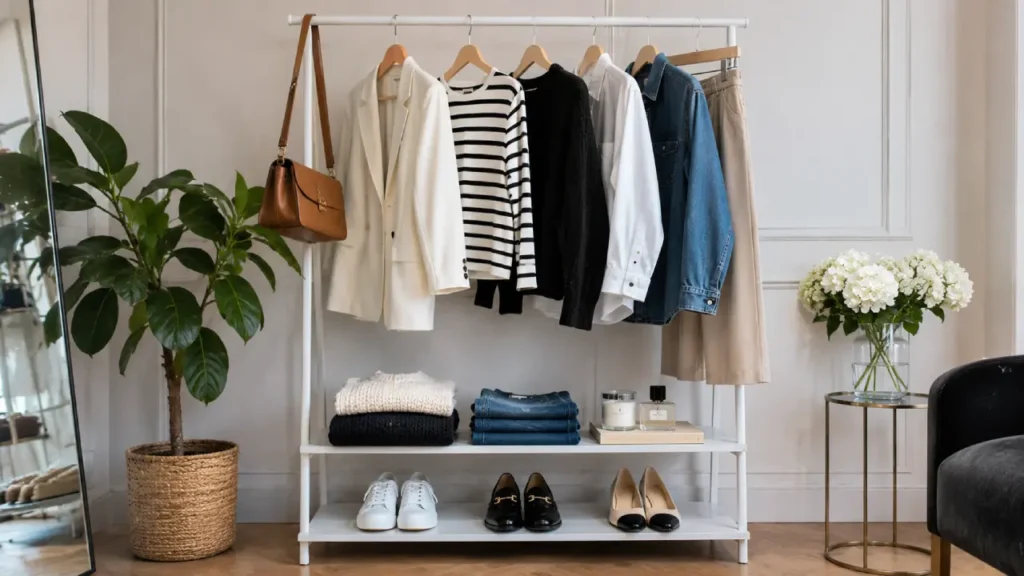
What you choose should fit your life. Think about your climate and your routine. Also consider what you do each day. Buying many shoes that hurt or never get worn is not worth it. Instead, focus on what you need for daily walking, school or work, social plans, and rain or heat. With fewer, solid shoes, getting dressed feels much simpler.
Use Accessories to Bring in Your Style
A simple closet does not need to feel dull or copied again and again. Small add-ons can shift the look of clothes you already own. A scarf, a belt, a wristwatch, basic jewelry, sunglasses, or a structured bag can make one outfit feel new without buying a whole new set.
This matters even more if you like keeping your wardrobe small. The same shirt and trousers can look different fast. Swap in sneakers and a tote, then switch to loafers and a structured bag.
Shop for Sets, Not One-Off Looks
A helpful rule for a French-style wardrobe is to plan the fit with what you already have. Before you buy, try to list at least three outfits you could build with your current pieces. This helps you avoid quick buys that look good on their own.
Later, those items can turn into trouble when you try to match them. It also makes your wardrobe feel more complete. More pieces end up working together, with less effort.
Spend More on What Gets Worn
You do not need to pay top prices for every single item. Instead, focus on where spending counts.
Trousers you wear often, shoes, jackets, and bags may be worth more money. They take more wear, so better stitching and sturdier materials can last longer.
If something is more seasonal or worn less, you can buy it with more care and fewer expectations.
The goal is not to chase a luxury wardrobe. You want items that cost a fair amount and still earn their place in your day-to-day routine.
Dress for the Day You Actually Have
French style is often shown with very neat photos, but a real closet has to handle regular life. Think about how you move each day. Clothes should work for commuting, classes, office hours, errands, meet-ups, and the weather where you live.
A set of clothes can look good on a hanger and still feel wrong once you wear it for real. If your wardrobe does not match your schedule, it will start to annoy you.
In a hot and wet city, light and breathable fabrics can matter more than thick layers.
If you walk a lot, comfortable shoes usually beat delicate shoes.
Style feels easier when it matches your routine.
Make a Simple Outfit Plan
It helps to have a few outfit ideas. They can cut down the time you spend in front of your closet.
For instance:
- Jeans with a white shirt and flats or sneakers
- Tailored trousers with a plain T-shirt and a blazer
- Midi skirt with a knit top and simple shoes
- Straight trousers with a striped top and a jacket
These are not strict rules. They are a starting point you can adjust to fit how you like to dress. When you repeat a few outfits, you stop overthinking in the morning.
Let Your Look Show Up on Its Own
One common mistake is acting like the French wardrobe is a full costume. You do not have to copy one exact Paris look. The point is the same idea: choose pieces that are easy to repeat, keep things simple, and wear them with a steady mindset.
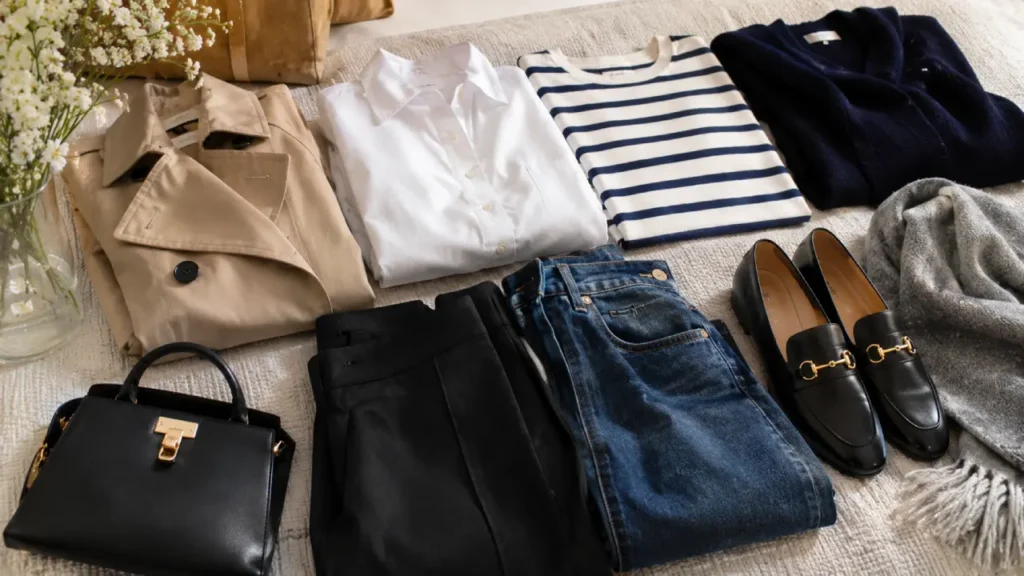
You can still pick what you like. Dresses can replace trousers. Bright colors can take the place of only neutrals. Sneakers can stay when you prefer them over loafers. A capsule approach should give you more options, not more pressure or new fashion rules.
Final Thoughts
French wardrobe basics matter less for the fashion label and more for how they make daily clothes easier to manage. Start with items that fit well and feel right. Add trousers that work in many settings, shoes you can wear for hours, and a few layers that do the job in different weather. Finish with a couple of accessories that stand out.
With this kind of setup, you can mix and match a lot of looks without a closet that never ends. Sticking to neutral shades helps you pair pieces faster. Still, small personal choices keep the outfits from feeling the same every day.
Each item should match how you live, what the weather is like, where you are, and what you actually like to wear. Also, every new piece should fit into the clothes you already own, not fight for space.
If your closet is built for reuse, not for endless newness, getting dressed stops feeling like a daily chore. You end up with a look that feels practical, comfortable, and like it belongs to you. Those traits stay useful over time.