
For years, traveling in India often followed a pretty well-known routine. You go to as many places as possible, you check famous spots, take pictures, and then move fast to the next stop. So, vacation plans turned into packed calendars where travelers spent more time commuting than truly experiencing the place.
Still, that pattern is slowly changing.More Indian travelers are leaning into what some call “slow travel,” a way of visiting that pushes quality over quantity. Instead of sprinting through multiple cities in a week, people are choosing to stay longer, talk with locals, wander around communities, spend time in nature, and let each destination unfold at a calmer tempo.And yes, it is reshaping travel habits across the country. Homestays in far off villages, tea garden stays, quiet hill towns, riverside cottages, an d countryside getaways are drawing visitors who want rest, not ju, st nonstop motion.In a world that keeps demanding speed and output, slow travel gives something many people are actually trying to recover: peace.
What Is Slow Travel?
Slow travel is not only “moving slower.” It is more like a mindset that invites travelers to connect strongly with a destination instead of rushing through a checklist of attractions.Instead of trying to see five cities in seven days, a slow traveler can just spend the whole week in one place. Somehow the entire vibe changes, from sightseeing mode to actually experiencing things, like paying attention to small stuff. A typical slow travel experience might look like:
- Staying in a local homestay, no big fuss
- Wandering through nearby villages
- Tasting regional food
- Picking up local traditions along the way
- Spending time outdoors, even when it feels unplanned
- Taking unplanned walks, with no strict route
- Talking with residents, not only taking photos
This approach has gained momentum everywhere, but it feels especially relevant in India, where many destinations are dealing with overcrowding and overtourism, again and again.
Why Travelers Are Moving Away From Packed Itineraries
Modern life already feels exhausting, even before you pack a bag.Long working hours, constant notifications, crowded streets, and digital overload can leave people mentally drained, like they’re tired before vacation starts. And here’s the irony: traditional tourism often adds even more stress.Early morning departures , back to back sightseeing, traffic congestion, hotel check ins, and endless travel logistics can make you come home more tired than when you left. As awareness for mental wellness keeps growing, more people are asking if a vacation should feel like work.Instead of trying to cram in the maximum number of attractions, travelers focus on maximizing enjoyment, relaxation, and personal connection. It also matches a broader cultural shift, where experiencing more back-to-back accomplishments” on paper.
The Rise Of Local Hospitality
One of the biggest trends driving the growth of slow travel in India is the growing love for homestays.
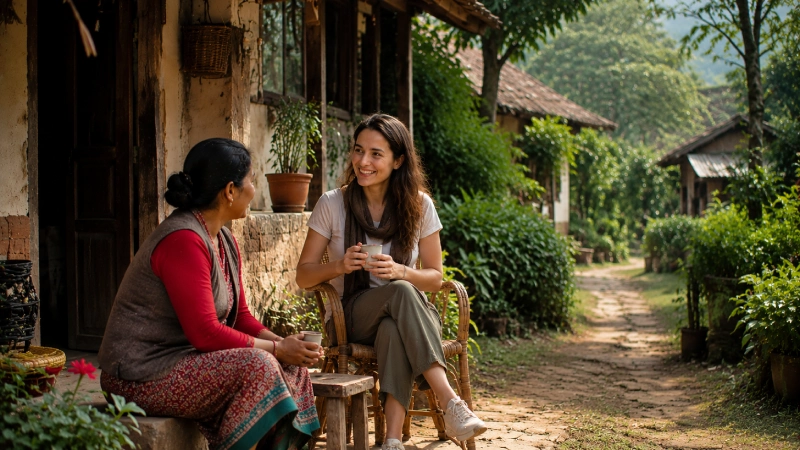
Unlike typical hotels, homestays provide travelers with opportunities to experience local life more directly, almost like you are living it instead of just passing through.Guests often share meals with hosts, they pick up regional customs, and they get perspectives that traditional tourism rarely provides- like really at all.Across India, homestays are flourishing in places such as :
- Himachal Pradesh
- Uttarakhand
- Sikkim
- Meghalaya
- Kerala
- Coorg
- Darjeeling
- Arunachal Pradesh
These stays often feel smaller and more personal than the huge commercial hotels that are basically the same everywhere.Travelers are leaning more toward authenticity than luxury these days.
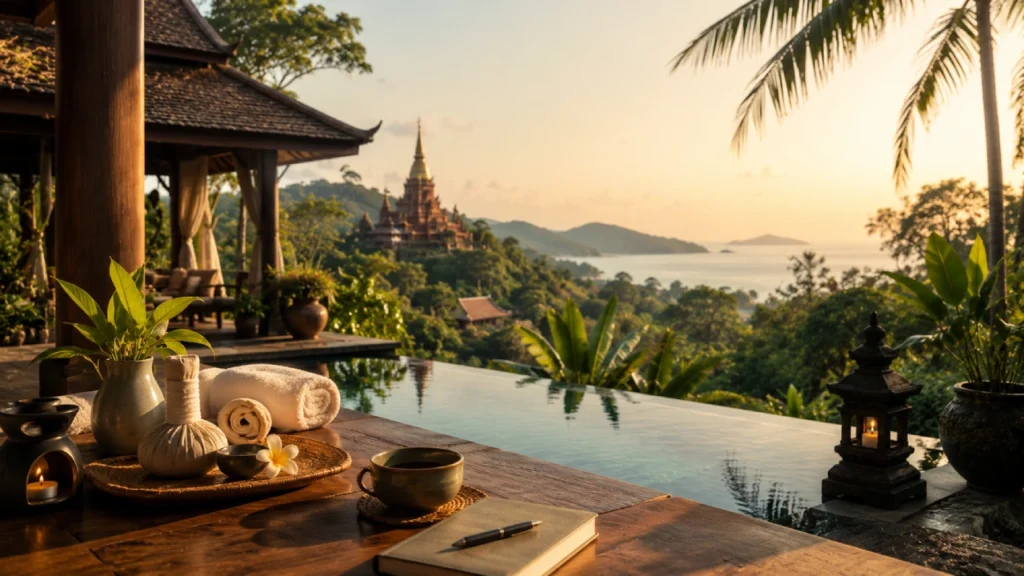
Tea Gardens Are Slowly Turning Into Wellness Retreats
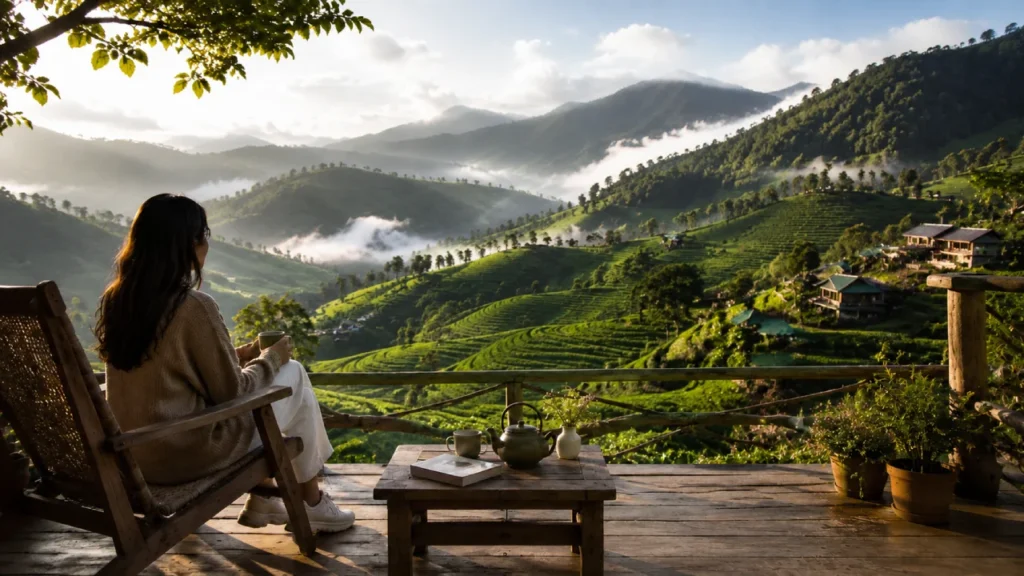
Tea estates and plantation stays are also becoming a real-deal part of travelers’ slow-travel movement. Areas such as Darjeeling, Assam, Munnar and the Nilgiris give travelers a chance to step away from city life, while still enjoying natural surroundings.Tea garden stays bring together several elements modern travelers keep asking for :
- quiet environments,
- scenic landscapes
- walking trails,
- fresh air
- cultural experiences
- local cuisine
Visitors might spend the mornings watching mist drift over the plantations, afternoons wandering through nearby villages, and evenings sitting down for conversations alongside freshly brewed tea.None of it works if you rush , so they just don’t. That is exactly why it has started to feel so appealing.
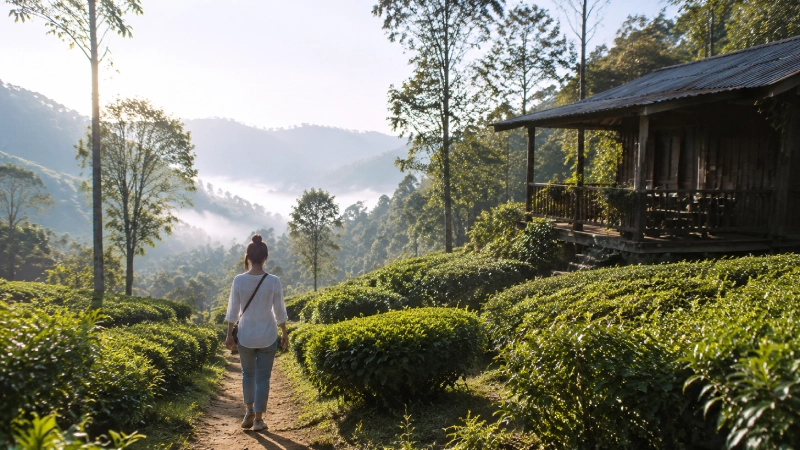
Small Hill Towns Are Replacing Overcrowded Destinations
India’s well-known hill stations still pull in big crowds, but more and more travelers are looking for calmer alternatives.Instead of choosing the heavily commercialized places, people are discovering smaller ,quieter options and well, they tend to stick around longer than they expected.And honestly it shows, because the atmosphere is different when there are fewer buses, fewer queues, and more space to breathe in towns where life, kind of, moves more slowly.
Places like:
- Tawang
- Kalimpong
- Landour
- Jibhi
- Shoja
- Ziro
- Yuksom
- Chaukori
In these places, well-known people often feel like they get:
- Less traffic
- Smaller crowds
- Easier contact with local communities
- Cleaner surroundings
- Gentler daily,, rout,ines
Lots of visitors say the trips feel restorative, not just something to “do for fun” and move on. The difference can seem slight, but it shows how travel priorities are shifting now.
Social Media Is Pushing the Trend
Here’s the funny part, social media has helped slow travel become more common though it is also blamed for overtourism a lot of times.Travel content is changing, bit by bit.
For years, online travel culture leaned hard on famous landmarks and very polished destination lists.Now people are more often drawn to posts showing:
- Quiet mornings
- Village living
- Nature walks
- Homestays
- Local dishes
- Wellness retreats
Creators are telling stories, more than just pointing at pretty spots. So travelers are gradually chasing experiences that feel real, and kind of emotionally heavy in a good way, not only visually impressive.
Sustainability Is Joining the Choice
Slow travel also connects really well with sustainable tourism. When visitors stay longer in one spot,t they usually support the local economy more directly. Small businesses, family-run places, local guides, neighborhood restaurants, and artisans can benefit from those extended days. And environmentally, the effect may be lighter too, compared with fast-paced tourism where you’re constantly moving from one destination to the next.
Conclusion
The rising interest in slow travel in India isn’t only a tourism thing. It shows a shift in how people want to spend time, energy, and attention.Instead of chasing crowded sights and burning through intense schedules, travelers are gradually leaning toward homestays, tea gardens, quiet hill towns, and small local moments with meaning. They want connection, not just consumption, and presence, not productivity.As daily life becomes faster and more demanding, the pull to slow down keeps growing.And for a lot of travelers, the most memorable journeys are no longer the ones that cover the longest distance but the ones where they pause, breathe , and experience.