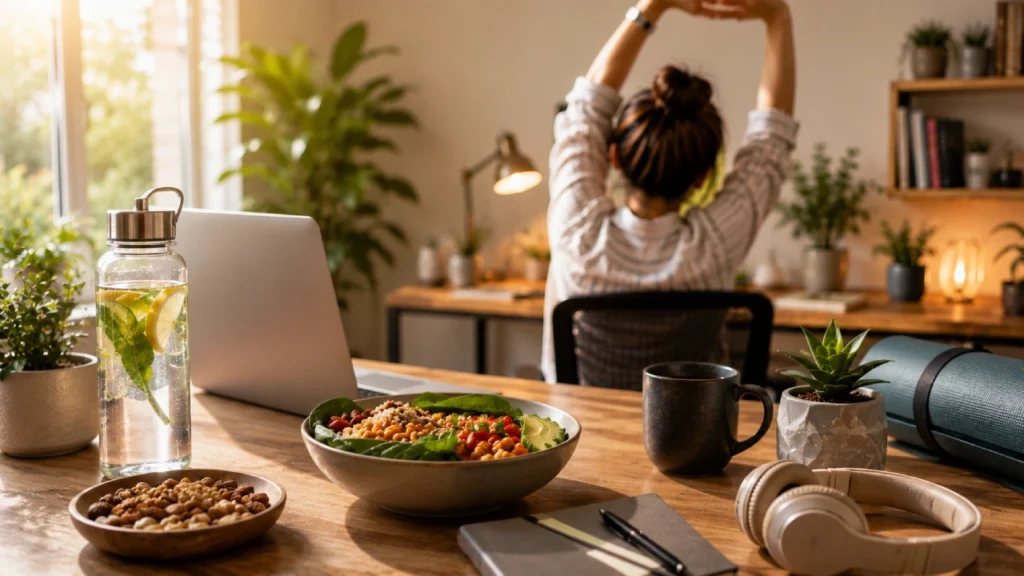

Yoga and Stretching Routine: Modern lifestyles have made sitting one of the most common things people do in their daily life, like work meetings on laptops, assignments done at a desk, commutes that are basically all seated, and even free time that starts and ends with screens. It is not uncommon for someone to sit for eight to ten hours a day, and yeah, they often don’t notice how little motion their body is getting, or how the aches start to creep in.
Even if sitting seems pretty harmless at first, long stretches of not moving can slowly mess with both your physical state and your mental wellbeing. Tight hips, stiff shoulders, neck discomfort, lower back strain, slumped posture, and less flexibility are showing up more often among students, working professionals, entrepreneurs, and also homemakers who end up doing long hours of tasks while staying in place at home.
As workplace wellness becomes a bigger topic, a lot of people are realizing they don’t always need heavy workouts in order to feel better. Sometimes just a few minutes of stretching and calm mindful movement can make the whole body feel noticeably different, not instantly perfect, but definitely better.
Yoga and stretching routines are getting more attention for a reason: they are gentle, easy to reach for, and they fit into a busy day without turning it into a whole ordeal. Also, they tend to focus on the same areas that prolonged sitting affects, like hips, shoulders, spine, and even breathing patterns, which sounds simple, but it matters.
Why Sitting for Long Hours Messes With the Body
The human body is built for movement, right? When you sit for long periods, some muscles stay in shortened positions for a while. Others end up weaker, simply because they are not being used as much. Usually the hips tighten up, the chest starts to round forward over time, and the shoulders start to slump a little, like they’re giving up. At the same time, the muscles that help hold you upright may lose strength, so discomfort shows up in the neck and back. Not always at once, but it tends to creep in.
Also, long bouts of sitting can lower flexibility, and you might feel physically wiped out, even if you’re not doing anything super strenuous during the day.A lot of people think, “Oh, this is just modern life; we’re supposed to feel bad.” But in many situations, consistent stretching and a gentle yoga routine can really help. Mobility improves, posture gets better, and overall comfort becomes way more manageable.
Start With Deep Breathing
Before you even think about stretching, it helps to slow down and pay attention to breathing.
Sit in a comfortable position or stand with feet about hip-width apart. Inhale slowly through the nose, then exhale gently through the mouth. Do that five times, steady and easy.

Deep breathing basically tells the body to chill. It helps you shift from thinking mode into body awareness. It can also support posture by encouraging tension release in the shoulders and neck.
The point is not just to stretch, but also to soften the stored stress that piles up from long workdays.
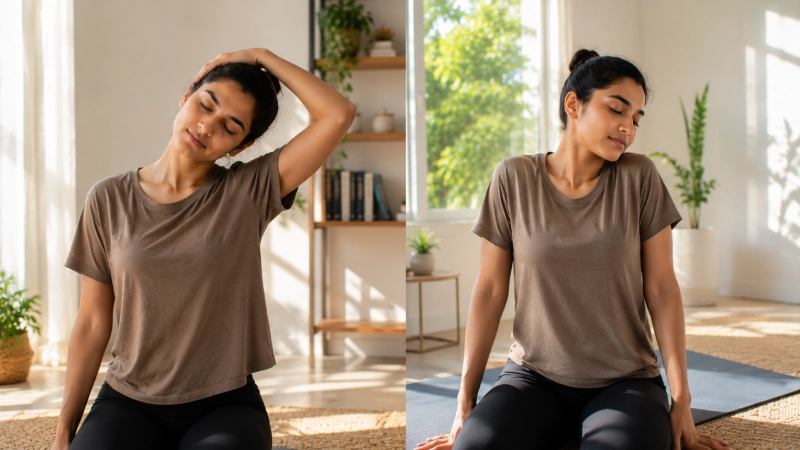
Neck Stretches for Everyday Tension.
Honestly, the neck is one of the first places that starts to feel off after a long sitting session. You know, looking down at phones, leaning over laptops, staying in the same posture for ages, all that can cause stiffness and tightness around the neck and shoulders.
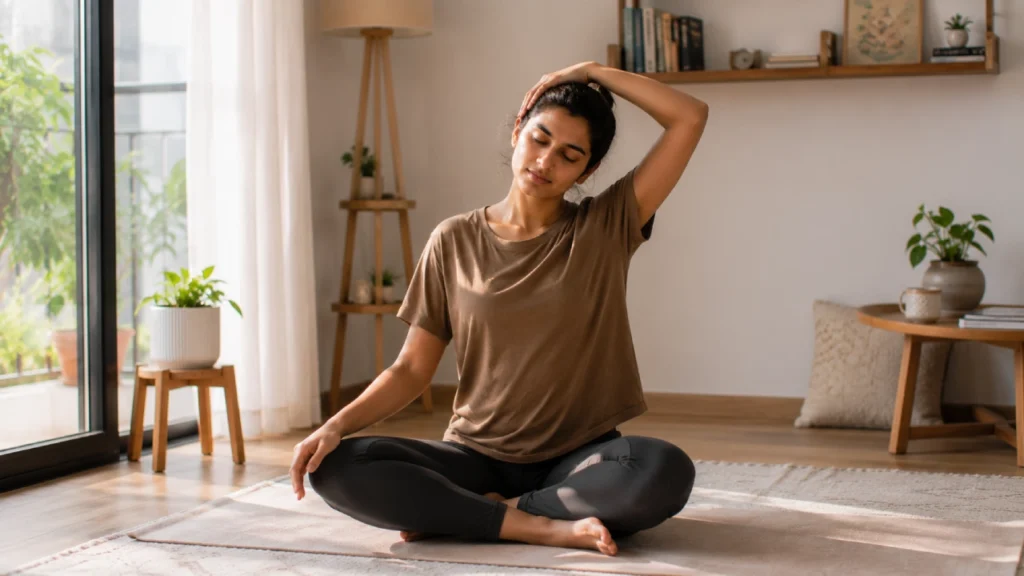
Start by gently dropping the chin toward the chest, hold it for about 15 seconds. Then slowly tilt the head toward one shoulder, and do it again on the other side. After that, go into some easy neck rotations, nothing fast. Keep everything slow, kind of steady, and controlled. If it ever hurts, stop. Stretching should be uncomfortable, maybe a little, but not painful. Even just a few minutes of neck mobility work can noticeably help with tension after long hours at a desk.
Shoulder Rolls And Chest Openers
A lot of people who sit for extended periods end up with rounded shoulders, plus a tight chest. It’s kind of sneaky how it builds up over time. Shoulder rolls, though, are one of the simplest ways to improve mobility without much setup.
Lift both shoulders up toward the ears, roll them backward, and then lower them slowly. Repeat this about ten times. Next, clasp your hands behind your back, then gently straighten the arms while opening up the chest. Hold for around 20 seconds, and keep breathing in a comfortable way the whole time.
These movements can help balance out that forward-rounded posture that shows up so often with desk work and screen time.
Cat-Cow Stretch for Spinal Mobility
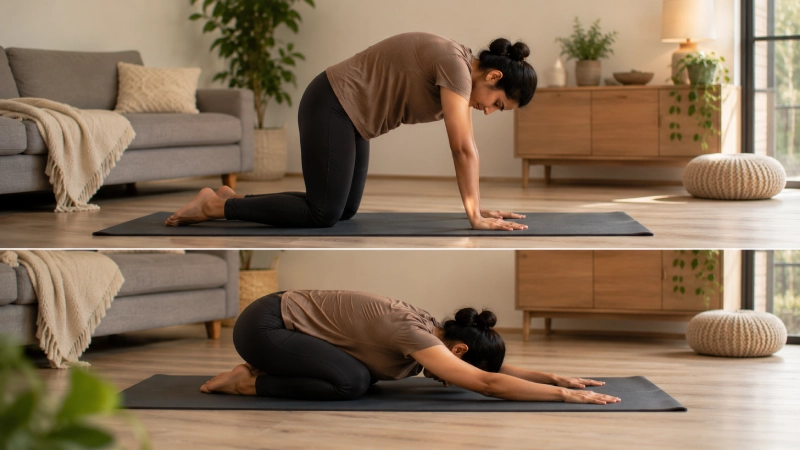
One of the more effective yoga movements for folks who sit all day is the Cat-Cow stretch. Start on hands and knees, then slowly round the back and ease the head down toward the floor, kinda like you are making a smooth curve. After that, gently arch the spine, lifting the chest a bit, and look upward.
Do the whole sequence about ten times.
This flowing routine supports flexibility throughout the spine and helps release tightness in the neck, shoulders, and lower back. Also, it can feel surprisingly refreshing, especially if you’ve been parked in a chair for several hours.
Child’s Pose for Lower Back Relief
The lower back often takes on a lot of the strain that comes from prolonged sitting. Child’sPosee is a basic yoga posture that helps people unwind while also gently stretching the back and hips.
First, kneel on the floor, then sit back onto the heels. Reach the arms forward, and let the torso drift down toward the ground. Stay there for thirty seconds, breathing slowly and evenly. Many people say this pose feels deeply fortifying, because it blends stretching with a kind of physical rest.
Seated Spinal Twist
Long periods of sitting can leave the torso and lower back feeling stiff. A seated spinal twist can bring back some gentle movement.
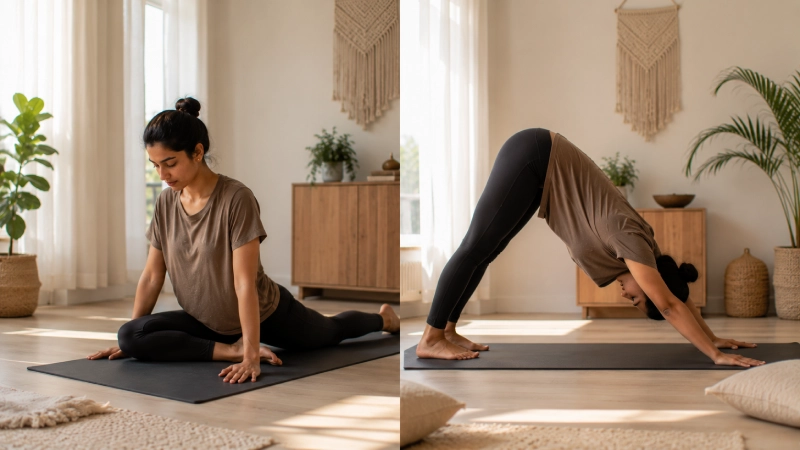
Sit in a comfortable position with legs crossed, or use a chair if that feels easier. Place one hand on the opposite knee, and slowly rotate the upper body while keeping the spine tall.
Hold for twenty seconds, then switch sides and repeat. Keep it mild, controlled, and steady. You do not need to twist with force; that’s really not the point.
Hip Stretches Are Essential
Your hips are among the body parts that get hit the most when you sit for a long time.
If your hips stay bent for hours, they can slowly start feeling tight and kind of annoying, uncomfortable even. One easy hip stretch is to step one foot forward into a gentle lunge, keeping the back leg extended. Pause there for about twenty to thirty seconds, then switch sides. Doing this regularly might help improve your mobility and support better posture and movement day to day.
Downward-Facing Dog for the Entire Body
Downward-Facing Dog is one of yoga’s most famous postures, and honestly it works on a bunch of areas at once.
Start from hands and knees, then lift the hips upward while your hands and feet stay planted in a comfortable way. This position stretches the shoulders, spinee, spine, hips, calves, and hamstrings; Pandi; Panditt; Pandit encourages steady, full-body motion. If you’re a beginner, you don’t have to aim for perfect form. Slightly bent knees are totally fine. Holding it for twenty to thirty seconds usually makes you feel reset, refreshed, and more awake.
Hamstring Stretches for Tight Legs
Sitting a lot doesn’t only bother your hips; it can also affect the backs of your legs. Stand normally and place one heel forward, with the toes pointing upward. Then hinge a little at the hips while keeping your back fairly straight. Hold for about twenty seconds,s then swap sides. Hamstring stretches can increase flexibility and help reduce that stiff, stuck feeling after long stretches of inactivity.
Finish with the Legs-Up-the-Wall pose.
One of the most relaxing yoga poses is the Legs-Up-the-Wall pose; honestly, it’s a “reset” feeling.
Lie down on the floor and extend the legs upward against a wall. Try to stay like this for about five minutes while breathing naturally. This posture promotes relaxation and usually feels especially soothing after long workdays, like you can finally drop your shoulders. It also gives a calm sensation that goes beyond simple physical stretching.
A Simple Daily Routine
For beginners, a stretching sequence can be done in roughly fifteen to twenty minutes, not too much time.
2 minutes: deep breathing
2 minutes: neck stretches and shoulder rolls
2 minutes: chest opener and a seated twist
3 minutes: Cat-Cow and Child’s Pose
3 minutes: hip stretches and Downward-Facing Dog
3 minutes: hamstring stretches and
Legs-Up-the-Wall pose
You don’t need special fitness levels or tons of yoga practice to get started. Consistency matters a lot more than perfection, even if some days are messy.
Why Little Movement Breaks Really Matter
A lot of people think exercise “counts” only when it’s a long workout or something intense.
But moving regularly through the day can still bring noticeable advantages.
Standing now and then, stretching between meetings, walking for a few minutes, and doing gentle yoga- all of that helps with comfort and mobility. The body seems to respond surprisingly well to small, repeated adjustments . Maybe that’s why stretching and yoga keep showing up in modern wellness talk; they’re an approachable way to move, and it fits into busy lifestyles pretty naturally.
Conclusion
Spending long hours sitting has become unavoidable in modern life for a lot of people. Still, discomfort, stiffness, and awkward posture don’t need to turn into a permanent thing from sedentary habits.
You can try simple practices like deep breathing, neck stretches, spinal mobility movements, hip stretches, and gentle restorative yoga poses, and you may notice a real difference in how your body feels during the day. It’s not always instant, but it can add up.
For students, working professionals, entrepreneurs, and anyone who spends long hours at a desk, yoga and stretching offer something quietly powerful: an opportunity to move on purpose while taking care of the body without requiring a complicated routine or expensive equipment.
And honestly, wellness isn’t always about huge, dramatic transformations. Sometimes it starts with something small like standing up, taking a deep breath, and stretching for a few mindful minutes.