

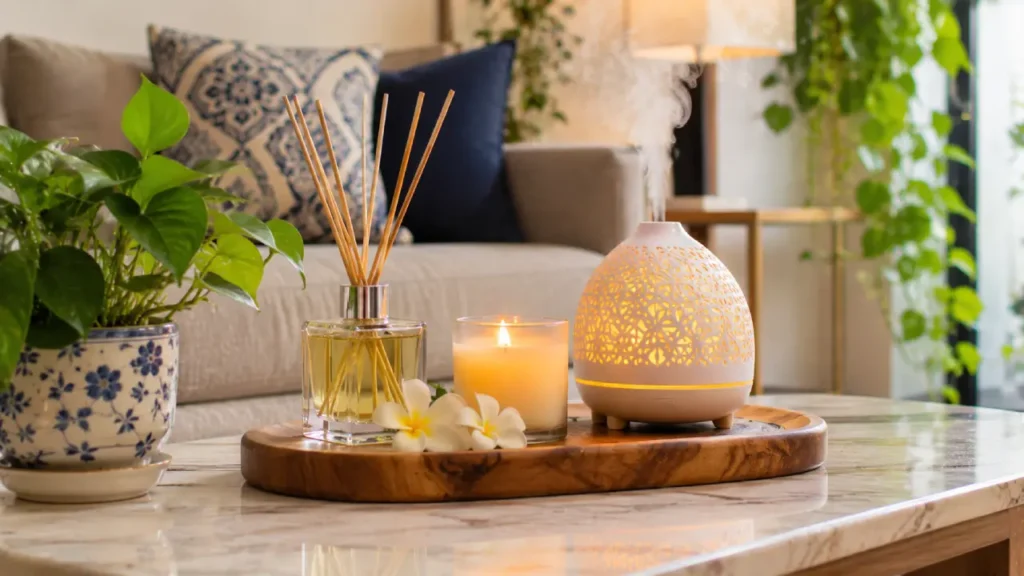
Home Fragrance Ideas: You do not have to change everything at once to make your home feel welcoming. Small scent choices can shift how a room feels, fast. Try fresh citrus in the morning. In the bedroom, go for light floral tones. For the kitchen, a gentle mix of warm spices can work well.
Scent is now seen as part of how a space looks. Still, it can stay simple and fit into daily life. Pick a fragrance that matches the area you are using. That can make chores feel less dull. It can also bring a bit of quiet into your day.
Keep it balanced. Do not force the same strong smell into every room. Choose a scent based on the season, the space, and what you actually enjoy.
Pick a Scent Mood for Every Space
Rooms do different things, so one smell will not fit all. In a living room, try smells that feel open and natural. Think of pine-like woods or a light touch of flowers. You want it to feel nice, not loud.
For bedrooms, softer scents often work better. Lavender, vanilla, or sandalwood can feel calm and easy. Bathrooms tend to like clean smells. Citrus and fresh herbs usually match that space well.
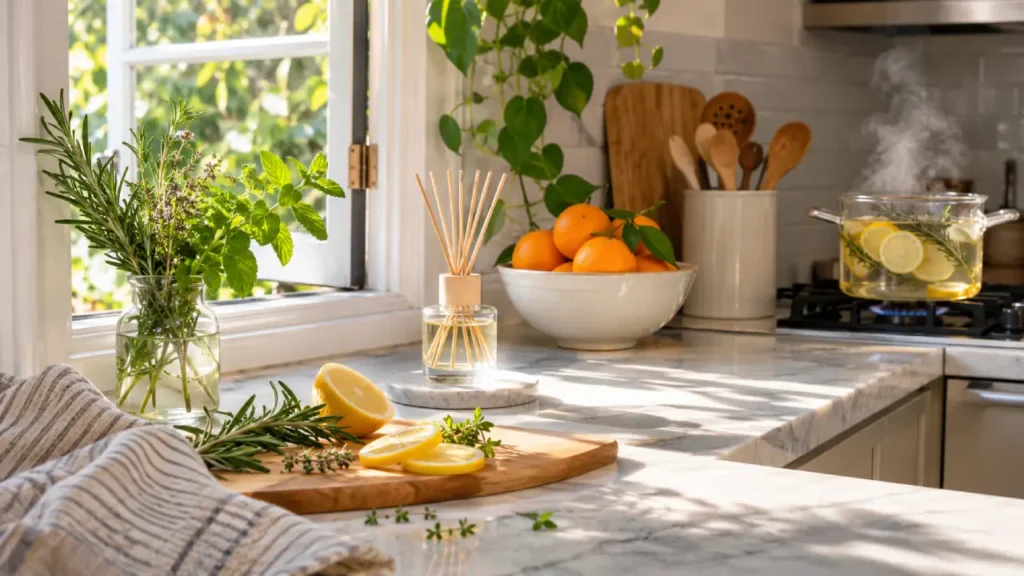
The kitchen is its own case. Cooking already brings strong odors. So choose scents that stay light. Lemon or eucalyptus-style notes can blend in without fighting the food smell. When you match the scent to the room’s job, it feels planned, not random.
Choose Candles for a Warmer Feel
Scented candles are one of the simplest ways to add fragrance. They also bring a cozy look. A candle can turn a dinner at night into something a bit more special. It can also fit a quiet book session or a slow weekend morning. Even when you are not using it, a candle can still look good. Choose glass jars, ceramic holders, or basic styles that look neat on a shelf or table.
Still, you must use candles with care. Put them on a firm, heat-safe surface. Keep them far from curtains and anything that burns. Also, never leave a candle on without watching it. Try to treat candle time as a small habit. Use it now and then, not as a thing that must stay lit all day.

Consider Reed Diffusers for an Even Scent
Reed diffusers work well in rooms where a flame is not a good idea. They let scent escape slowly and spread through the area. You can set one on a shelf, a side table, or even a bathroom counter. Since the smell stays fairly steady, the room can feel more put together.
You do not need one in every room. A single diffuser in the living room, a hallway area, or a bedroom can be enough. If the scent feels too intense, use fewer reeds. Do this based on what the product guide says.
Make the Entry Feel Inviting
The front area is what guests notice first. So it is a smart spot for a gentle scent. A small diffuser, a fragrance sachet, or a mild room spray can add a clean aroma. It should not take over the rest of the home.
Bright citrus, soft green notes, or light wood scents can be a good match. They can give a quick feeling of freshness. Also, try to keep the entry tidy and let air move through the space.
Make Your Home Smell Nice in a Way That Feels Natural
You do not need to spend money on expensive air fresheners. Start by using things you already own. Fresh flowers work well, and so do dried herbs. You can also use citrus peel and a few whole spices. They can leave the air smelling clean and warm.
Try a simple bowl of lemons on a counter. It looks bright and gives off a crisp scent.
Add fresh flowers in a living room or a dining space too. They bring a gentle smell that feels easy. You can warm up a pot on the stove, too.
Use cinnamon, cloves, orange peel, or cardamom. Put everything in water and heat it slowly. Stand nearby and watch it as it warms.
Make Small Changes When the Season Shifts
You do not have to use the same strong smell each day. A mild change is usually enough. Keep scents soft in the bedroom.
Keep the bedroom light and calm. In a small room, a heavy smell can feel distracting. Pick softer notes like light florals, herbs, or woods.
A creamy scent can also feel comforting. You can use a linen spray on your sheets. Check the label so you know it is safe for your fabric. Do not aim for a smell that is too sharp.
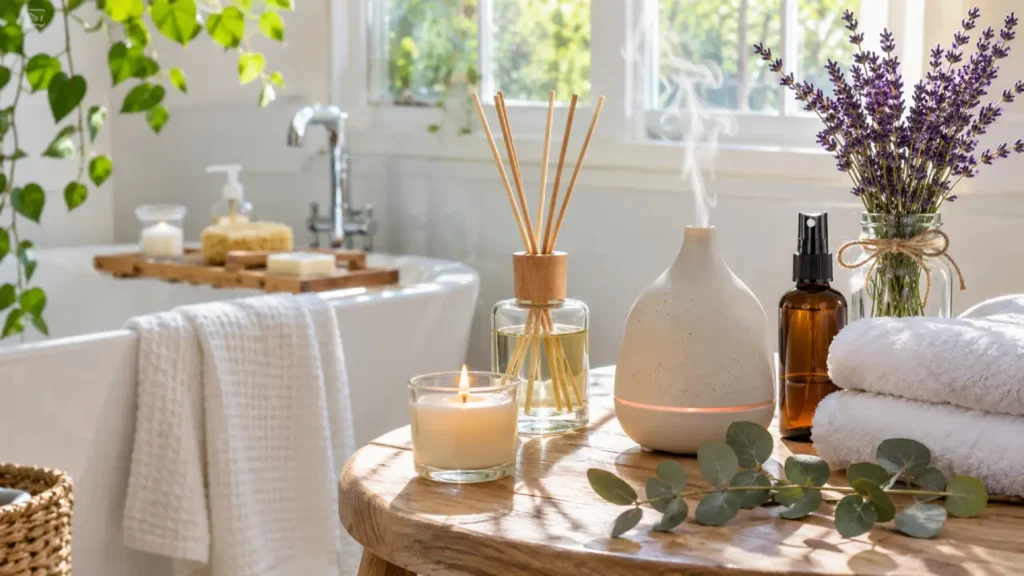
A light scent that stays in the background is enough. It should help the room feel fresh without grabbing attention.
Make the Bathroom Smell Fresh
Bathrooms are a good place for light, fresh scents. Citrus, mint, eucalyptus, and soft herbal tones can feel airy and clear. A small diffuser or a sachet is usually enough, especially in tight spaces.
Still, washing and airing out the room matter more than any scent. Let the fragrance support what is already clean, not cover smells that should be gone. A small plant, fresh towels, and tidy counters also help the room feel cared for.
Match Scents According to the Time of Day
You can also change the scent as the day moves along. For the morning, try something bright like citrus or a green mix. In the evening, richer tones may fit better, such as vanilla, sandalwood, or amber.
It helps you feel a shift between daytime tasks and downtime. Start a diffuser or light a candle when you want that cue to happen. Over time, the routine can matter as much as the scent itself.
Mixing Scents in One Area
A small home can start to feel rough when you add too many bold smells at once. A candle, a diffuser, a spray, and incense can fight each other if they all have different styles.
Skip the big pile. Choose one main scent direction first. After that, add softer choices that match it. For example, use citrus in shared spaces. In the bedroom, go with a lighter herb scent. When you keep the plan neat, each smell feels clearer instead of crowded.
Fresh Air Helps
A scent feels better when air can move around. If you can, crack the windows when it is not too hot or cold. That way, the smell does not build up in the room. This matters a lot in kitchens and bathrooms. Those areas hold on to odors longer.
If a scent makes you feel unwell, triggers a headache, or irritates your skin, stop right away.
Then open up the space and let it air out. If you have asthma or allergies, be careful with scented items. Your home should not force you to tolerate a strong smell.
Pick Items Thoughtfully
Fragrance has a lot of forms. Candles, oils, sprays, diffusers, incense, and more are sold under that name. The components and how strong they are can differ a great deal. So can the usage steps.
Check the package first. Follow what the maker says, especially if the product uses fire, warms oil, or runs on electricity.
Do not treat “natural” as a guarantee of safety. Some essential oils may sting the skin. They can also be risky for pets, and it depends on which oil it is and how the animal is exposed.
If you have pets, look closely at the product. Confirm that it is okay to use around animals before you bring the scent into shared spaces.
Keep the Plan Easy
Home fragrance does not have to turn into another daily task. You can use a small set. For example, one diffuser in the main room, a candle now and then, and a light natural scent in the kitchen.
Switching scents from time to time helps too. It can stop the home from smelling too strong. It also lets usual smells feel fresh again. A good routine should match your normal day. It should not demand constant upkeep.
Use Scents That Complement Your Home
Fragrance feels right when it fits what is already in the room. If the home is minimal, lighter and cleaner scents often blend in well.
If the space has wood, thicker fabrics, and gentle lighting, then warmer notes like spice or timber tend to feel natural.
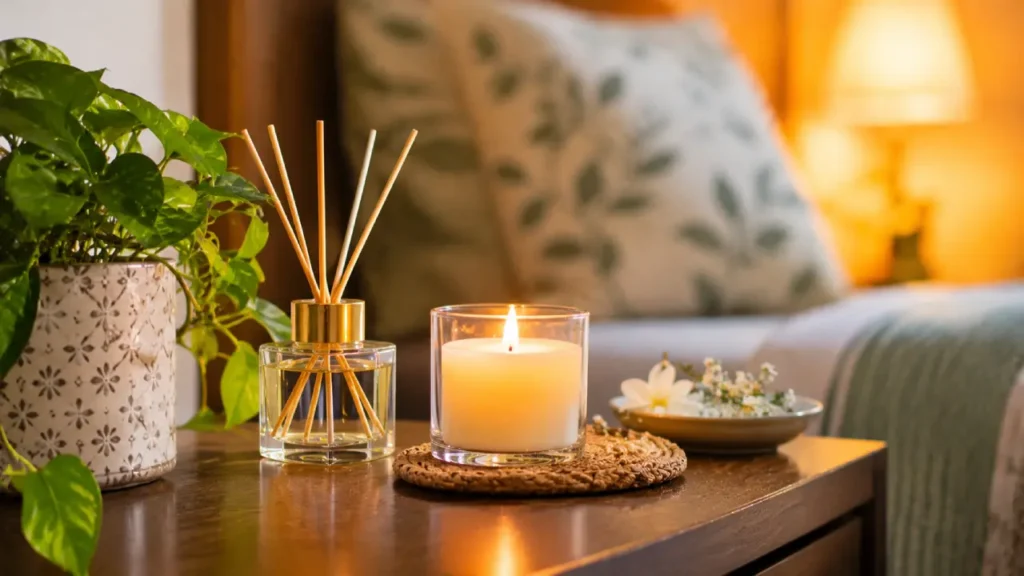
In a room that is full of plants and bright light, green tones or citrus can sit easily. You do not need hard rules here. The goal is simple. Make the place feel easy for the people living there.
Conclusion
Home scent can change daily life without rebuilding anything. A candle on a calm night can help. A mild diffuser by the door can set the mood. Fresh flowers can also bring a gentle smell that makes the space feel welcoming.
Often, the best plan is to keep it light. Pick a scent that suits the room. Use it in small amounts. Make sure there is fresh air. Also, do not mix several strong fragrances at once.
Making the home feel softer is not about turning every room into a luxury setup. It is about small sensory touches that help familiar places feel more comfortable, more like your own, and more pleasant to be in.