


Most days start and end with some kind of screen. Like, the alarm goes off from a phone in the morning. Work happens on a laptop. Messages drop in all the time through apps, and then social media quietly sneaks into every spare gap. At night, streaming takes over the hours that used to be for real talks, small hobbies, or just plain rest. For a lot of people, screens have gotten so intertwined with everyday routine that being cut off for a couple hours can feel weirdly uncomfortable—even a short break.
Still, digital wellbeing talk is spreading, and it is nudging families, couples, students and busy professionals to think again about how they use tech.
Andhere’ss the thing: a digital detox ” now doesn’t have to mean pricey wellness retreats or a big weekend escape. More and more, it starts at home with something simpler: an intentional evening without screens.
A few hours away from notifications, scrolling, emails, and that never-ending feed can reduce mental tiredness, help you sleep better, support deeper conversations, and make room for activities that usually get postponed during hectic weeks.
The point isn’t to ditch technology completely; it’s about building moments where focus comes back to what’s actually happening, instead of being constantly split between multiple screens.
Why Screen Fatigue Is Becoming A Modern Problem
Technology, of course, has improved convenience and connectivity. But constant time in front of screens is also tied to unintended consequences, like, you know, the subtle kind.
A lot of professionals spend their whole workday hopping between laptops, smartphones, tablets, and virtual meetings, all day. Students do something similar too; they jump from online classes to assignments to social media and then to entertainment, sometimes without even noticing. nd even during leisure time, people keep feeding the digital rhythm, rather than really unplugging.

So mental overstimulation is becoming more common than before.

Constant notifications, endless scrolling, and this quiet pressure to stay connected can make real rest hard to reach. Many individuals say they feel mentally worn out, even after evenings on the sofa watching content or casually scrolling.
It’s like the mind stays busy, even when the body looks settled.
This growing awareness is one of the reasons digitadetoxo” routines are picking up steam, as part of modern wellness culture.
Start by Creating a Clear Boundary
A major challenge when you try reducing screen time is that there are no clear boundaries. Most people mean well; they want to spend less time on their phones, but then they keep checking messages, emails, or social media just because it feels automatic. It works best when a screen-free evening has a real beginning and an ending so you can actually feel it.
A pretty simple way is picking one evening each week and then setting a precise time when the devices go away. Phones can be placed in another room, televisions switched off, and laptops closed for the rest of the evening, unless there is a true emergency. If you treat it like a planned little event, not just some restriction, it usually feels more fun and more sustainable too.
For Families: Bring Back Shared Activities
Families can end up being together physically, but each person is still mentally on a separate screen zone. Parents look at emails, teenagers scroll social feeds, and younger kids bounce between different digital entertainment platforms. Even if everyone is in the same room, real talk and togetherness can get surprisingly thin.
A screen-free evening, though, opens the door to reconnect through simple shared activities. Board games, card games, cooking together, storytelling, baking, gardening, or even a family walk after dinner can bring conversation back in a natural way. You can also try reading aloud, solving puzzles, or revisiting old family photographs, which can feel oddly satisfying as an alternative to the usual screen-based stuff.
The pointisn’tt to force perfectly organized activities; it’s more about creating openings for genuine interaction.
For Couples: Make Room for a Real Talk
Modern relationships kinda wrestle with digital distractions. A lot of couples end up sitting side by side, but scrolling on separate screens, and honestly, it becomes this automatic thing.
After a while, that routine can shrink the chance for conversations that actually matter, shared moments, and that emotional closeness feeling.
A digital detox evening helps everyone slow their pace and be a bit more deliberate. You could cook dinner together, test a new recipe, play a game, put on music, take an evening walk, or talk without interruptions, and it really changes the vibe from a usual weeknight.
Even small rituals, like pouring tea on a balcony or reading next to each other, can feel oddly restorative once phones aren’t demanding attention all the time.
For Professionals: Get That Offline Calm Back
Working professionals often rack up some of the longest screen time. After the whole day of replying to emails, joining virtual meetings, and handling digital chores, many still keep consuming content on their phones or streaming apps during downtime.
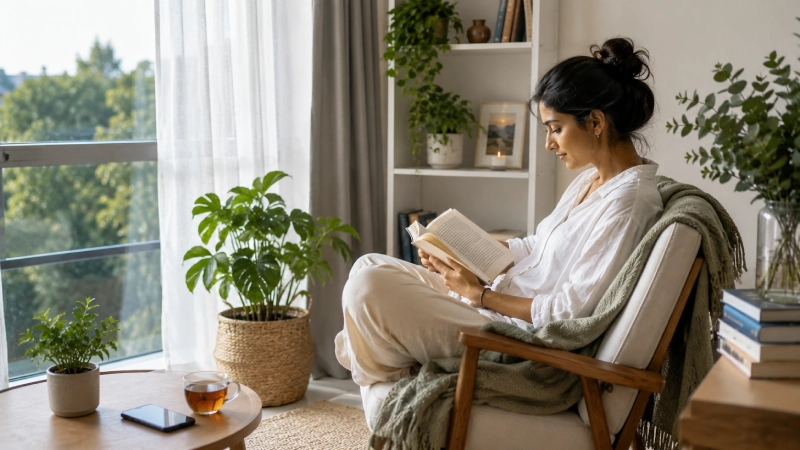
A screen-free evening gives a chance to lean into slower ways of unwinding. Read a book, journal a few lines, sketch ideas, tidy up the living space, try yoga, listen to podcasts through speakers, or make your favorite meal; these things can create a fuller kind of rest than passive scrolling.
And many professionals notice that stepping away from screens helps lower that constant”“on cal”” pressure, even when the workday is technically over.
For Professionals: Rediscover Offline Rest
Working professionals often deal with some of the highest levels of screen exposure.
After spending whole days answering emails, jumping into virtual meetings, and sorting digital tasks, many still keep consuming content on their phones or through streaming platforms during downtime.
A screen-free evening gives you a chance to move toward a slower kind of relaxation. Reading books, journaling, sketching, arranging living spaces, doing yoga, listening to podcasts out loud through speakers, or cooking a favorite meal can feel far more restorative than passive scrolling, honestly.
Also, lots of professionals notice that stepping away from screens reduces that background feeling of being permanently on call, “even when the workday is technically over.
Build a Calm Home Environment
A solid digital detox really leans on swapping out the usual screen-based stimulation with something that feels warmer and more inviting. Soft lighting, candles, cozy seating, music, books, herbal tea, fresh flowers, or calming scents can turn regular evenings into something more intentional.
And no, itdoesn’tt need costly purchases. Little changes work, like lowering bright lights, opening windows for a draft of air, playing gentle music, or making that favorite drink. Those small cues can tell your mindit’ss okay to slow down.
The atmosphere matters, because people often reach for screens out of habit, not because they truly want to. When you set up other sources of
comfort, screen-free time starts to feel more natural, and even a bit easier to choose.
Reconnect With Forgotten Hobbies
A lot of the time during a digital detox, you notice how many hobbies kinda quietly vanished, right under all that screen time. Things like reading, painting, knitting, writing, photography, music, gardening, baking, and crafting often get sidelined just because digital entertainment is more immediate.
A screen-free evening makes room for coming back to interests that used to feel genuinely good. The aim is not productivity, like at all. It’s more about enjoyment, really.
Even spending one hour drawing, or tending to plants, or reading fiction can feel surprisingly refreshing, compared to endless scrolling through stuff that is quickly forgotten.
Better Sleep Starts Before Bedtime
One of the biggest perks of reducing evening screen use is better sleep quality. Blue light from phones, tablets, and laptops can mess with your natural sleep rhythms. Plus, the constant stimulation from social media, news, work messages, and entertainment makes it harder for the brain to shift into rest mode.
Swapping screens for reading, journaling, stretching, or even just quiet conversation can create a calmer bedtime routine. Many people find that they fall asleep easier and wake up feeling more refreshed after even one evening away from screens.
Digital Detox Is About Balance, Not Perfection
A common misunderstanding about digital detoxing is that it means you have to abandon technology fully. But honestly,that’ss not the idea. The goal is balance. Technology is still important for work, communication, education, and entertainment. A digital detox is mainly about making intentional moments where screens stop being the automatic default when boredom, stress, or free time shows up.

An occasional screen-free evening each week can be enough to build greater awareness around digital habits, without feeling restrictive or unrealistic. Small changes often prove more sustainable than dramatic lifestyle overhauls.
Conclusion
Digital detoxing at home is becoming an increasingly valuable wellness practice in a world dominated by constant connectivity. For families, it creates chances for meaningful interaction. For couples, it encourages deeper connection. For professionals, it offers a real moment to step away from work and digital demands.
The beauty of a screen-free evening feels simple in a quiet way; no expensive retreat, special equipment, or complicated planning is required. Sometimes, all it takes is turning off a device and choosing to spend a few hours differently.
In a culture that keeps competing for attention, those quiet, uninterrupted moments are becoming a rare kind of luxury. And maybe that is why digital detoxing resonates with so many people today: once in a while, looking away from a screen makes it easier to reconnect with everything happening right in front of us.