
Most apartments have one. Few people actually use it. The balcony is one of the most underutilized spots in the modern home. It is a shame, because it is also one of the easiest to transform, and one of the most rewarding when you do.
You do not need a large footprint, a generous budget, or a background in interior design to turn a small balcony into the most-used corner of your home. You need a clear starting point, a few considered purchases, and the understanding that small outdoor spaces reward intention over accumulation. Here is how to do it.
Start With the Floor: The Outdoor Rug Does More Than You Think
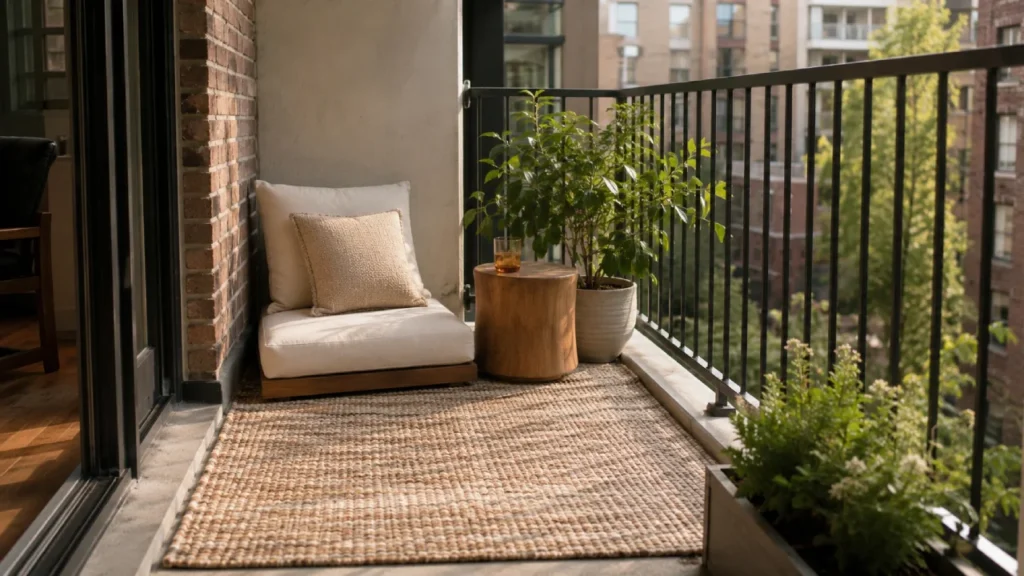
The single fastest way to make a balcony feel like a room is to lay an outdoor rug. This is like a small thing, but the visual and psychological effect is disproportionate to the effort involved.
An outdoor rug defines the space. It tells the eye where the living area begins and ends, which gives even a narrow balcony a sense of boundary and intention. Without one, the most carefully arranged furniture floats on bare concrete and looks like it landed there by accident. With one, everything pulls together into something that reads as considered rather than assembled.
For small balconies, a rug slightly larger than your seating footprint works better than one that fits exactly. The visual generosity makes the space feel bigger. Stick to simple geometric patterns or textured weaves in earthy neutrals (terracotta, sage, jute tones, warm cream) that will compete with everything else. Outdoor rugs with flat weaves handle weather and easy cleaning better than looped constructions, which trap debris and hold moisture. Budget-wise, a decent flat-weave outdoor rug runs between ₹1,500 and ₹4,000, with plenty of good options in the middle range at home furnishing retailers and marketplaces like IKEA, Pepperfry or Amazon India.
Seating: Low, Layered, and Space-Conscious
The most common seating mistake on small balconies is importing full-sized indoor furniture outdoors, such as a dining chair that is too tall for the space, a table that leaves no walking room, or a setup that makes the balcony feel like a corridor rather than a retreat. The solution is to go low and keep proportions modest.
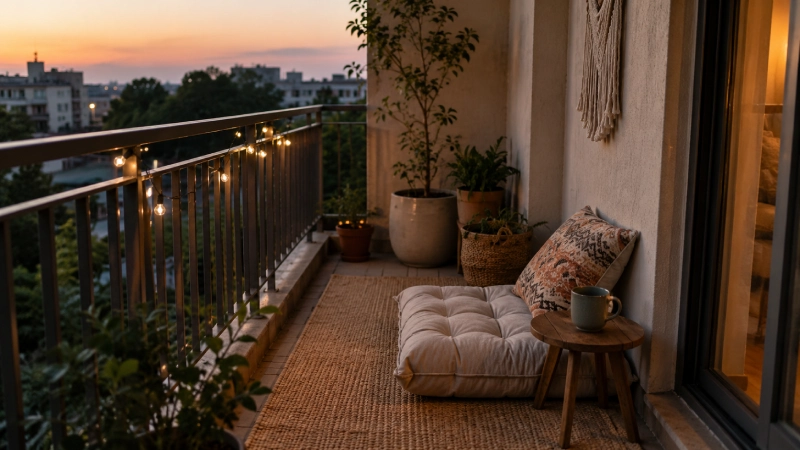
Floor cushions layered with soft outdoor throws are the most space-efficient starting point. They take up minimal room when stacked, compress to nothing for storage, can be mixed in patterns and textures without looking chaotic, and create the kind of relaxed, grounded aesthetic that makes a small outdoor space feel intentional. A set of quality outdoor floor cushions starts at around ₹1,200 per piece and lasts multiple seasons if you bring them indoors during heavy rain.
For those who prefer proper seating, slim-profile rattan or wicker chairs with exposed legs are the right choice. Furniture with visual weight (solid wood benches, thick-armed chairs, chunky stools) eats space both physically and visually. Rattan’s open weave reads as light, and the slightly elevated seat height suits the balcony’s transitional indoor-outdoor character better than floor-level alone. A small folding side table in teak or powder-coated metal next to a single chair completes the setup without crowding the floor plan.
If your balcony structure can support it, a hanging swing chair has become the defining statement piece of 2026 balcony design. It takes up roughly the same floor footprint as a standard armchair. Still, it creates more visual interest dramatically, and the gentle motion alone turns a balcony into somewhere you actively want to sit. Quality hanging chairs with weather-resistant cushions typically start around ₹6,000–₹12,000, making them a considered investment rather than an impulse buy.
Lighting in Small Balcony: Warm, Layered, and Never Harsh White
If there is a single non-negotiable in balcony transformation, it is warm lighting after dark. A well-lit balcony in the evening is a completely different space from the same balcony in daylight, and the difference between a balcony you use at night and one you abandon after sunset is almost entirely down to the light quality.
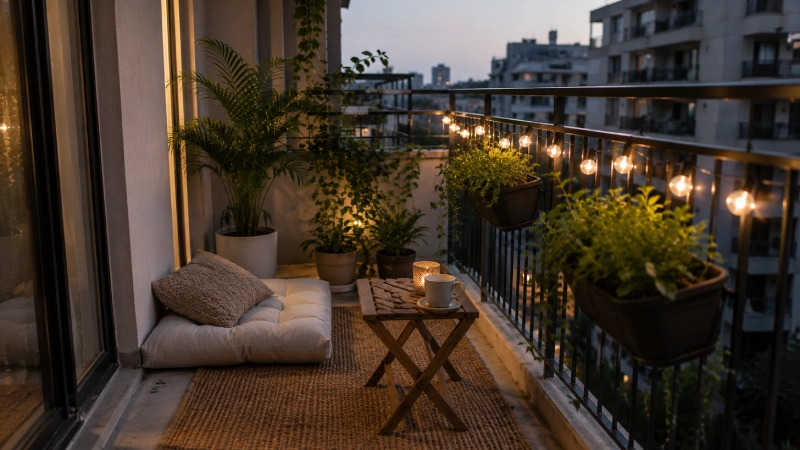
The tool of choice is warm-white string lights, and the reason they dominate every balcony transformation is that they earn it. String lights are removable, require no drilling (solar-powered versions need no wiring at all), drape along railings and overhead hooks without permanent fixtures, and create the kind of ambient glow that no overhead bulb can replicate. Warm white bulbs, colour temperature around 2700K, are the right call. Cool or daylight-tone bulbs (anything above 4000K) create a clinical brightness that works against every effort you have made with soft textiles and natural materials.
Solar string lights are the practical first choice for renters, with a quality set running between ₹800 and ₹2,500. LED versions that plug into an outdoor socket offer more consistent brightness and are worth the extra step of finding an outdoor-safe extension cord. Supplement with two or three glass lanterns holding real or LED candles at floor level or on a side table. The layered height (lights above, lanterns below) gives the space the same warm depth that good restaurant lighting uses, and it costs almost nothing.
What to avoid:
- Harsh white spotlights
- Single overhead fixtures
- Fluorescent replacements.
As a general principle, if the lighting would suit a car park, it will not suit a balcony retreat.
Plants: Vertical, Low-Maintenance, and Purposefully Placed
Plants are what turn a balcony from a styled space into a living one. They add movement, oxygen, sound absorption, and the kind of organic unpredictability that no furniture arrangement can replicate. The key for small balconies is thinking vertically.
Railing-mounted planters and wall-hung vertical planter pockets are the two most efficient ways to introduce significant greenery without surrendering floor space. A single railing planter running the length of a standard balcony creates a green visual backdrop that makes the entire space feel more enclosed and private, which is exactly what you want in an urban apartment setting where neighbors or road noise are part of the view.
For plant selection, choose varieties that work with your actual light conditions rather than the ones you find most beautiful on Pinterest.
- Pothos, money plants, and peace lily thrive in indirect light and require minimal maintenance.
- Succulents and herbs like mint, tulsi, and curry leaf handle direct sun well and carry the added function of a tea corner garden (more on that shortly).
- Flowering plants like bougainvillea add color and can be trained up a railing for a dramatic effect, but require more consistent care.
Whatever you choose, group plants in odd numbers and vary the heights:
- A tall plant in a corner
- A mid-height planter at railing level
- A railing plant spilling from a shelf
Tropical greenery paired with warm lighting creates what designers consistently describe as the most effective mood combination for small outdoor spaces, with the contrast of lush organic material against the warm amber glow being close to universally calming.
The Tea Corner: Where the Space Becomes a Ritual
A balcony without a purpose is a balcony you will not consistently use. The most reliable way to build a daily relationship with your outdoor space is to anchor it around a habit you already have. For most people in India, that habit is chai.
A tea corner does not need to be elaborate.
- A low wooden table or a tray on a flat surface
- A single decent chair or a floor cushion with back support
- A small ceramic or steel caddy holding your tea essentials
- A plant or two within arm’s reach
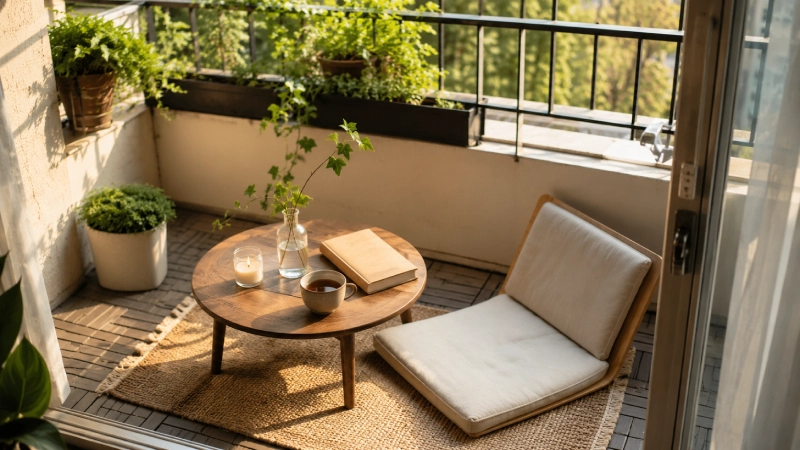
Keep a small tray on the balcony table permanently, styled with a few objects:
- A favourite mug
- A small candle
- A plant cutting in a bottle vase
- A book.
The tray contains the composition and makes it look deliberate even when it is not. At its most minimal, a balcony tea corner is a ₹500 tray, a ₹200 cushion, and whatever mug you were going to use anyway. At its most curated, it is rattan furniture, a herb garden, and soft lights at dusk. Both versions work because the ritual is the same.
What to Watch Next
The Japandi aesthetic (a blend of Scandinavian simplicity and Japanese minimalism) is shaping balcony design most strongly in 2026, with its emphasis on natural materials, muted palettes, and the deliberate removal of anything unnecessary. For small balconies on a budget, this is genuinely good news since the design direction rewards restraint, which means fewer purchases rather than more.
The most effective balcony transformations in 2026 share one strong seating element, warm layered lighting, vertical greenery that creates a living backdrop, and a single purpose around which the space is organized. You do not need to do all of it at once. Start with the rug and the lights. Add the plants. Build the tea corner. The balcony that currently holds a drying rack and good intentions is closer to a peaceful retreat than it looks.
All price estimates are approximate and based on Indian retail availability as of mid-2026. Actual costs vary by brand, material, and retailer.